

What is Breast Cancer?
Even after being the most common cancer affecting women worldwide, breast cancer is also one of the most treatable forms of cancer when diagnosed and managed at the right time.
Breast cancer develops when cells in the breast begin to grow abnormally and form a tumour. If left untreated, these cells can spread to nearby lymph nodes and other parts of the body.
Although the condition can affect women of all ages, early detection often leads to more treatment options and better outcomes. This is why paying attention to changes in your breast health and seeking timely medical advice is so important.
Early diagnosis is only the first step in managing breast cancer. Choosing the right Breast Cancer Specialist and treatment plan is equally important. At Healius, we provide personalized breast cancer treatment backed by experienced specialists, advanced technology, and a patient-first approach to care.
Symptoms of Breast Cancer
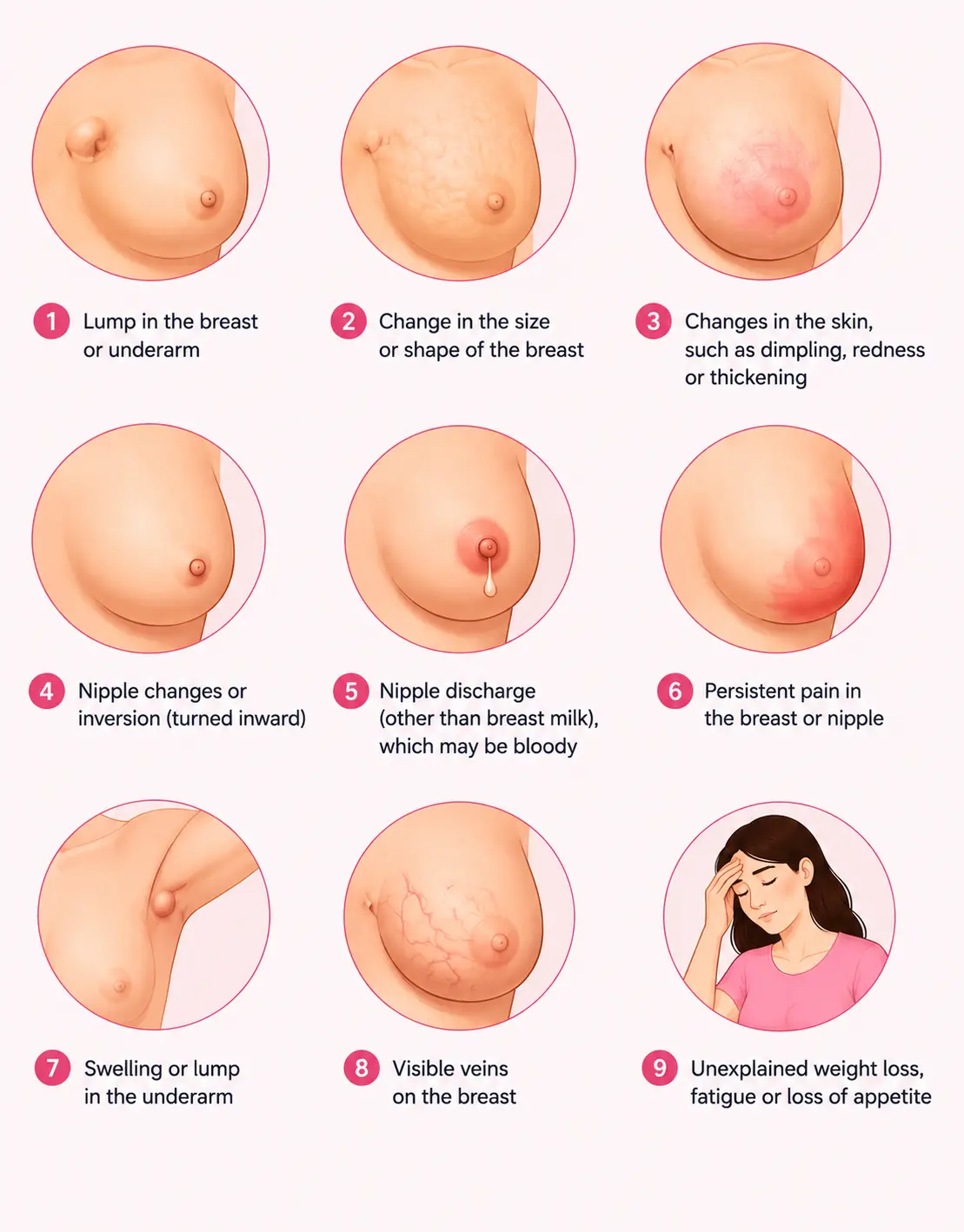
The symptoms of breast cancer can vary from person to person. While some individuals may notice obvious changes in their breasts, others may not experience any symptoms in the early stages. Common signs and symptoms include:
- A new lump or thickening in the breast or underarm area that feels different from the surrounding tissue.
- Changes in breast size, shape, or appearance that occur without an obvious reason.
- Dimpling, puckering, or redness of the breast skin, often giving it an orange peel-like texture.
- Nipple changes, such as inversion (turning inward) or a noticeable change in position.
- Unusual nipple discharge, especially if it is bloody or occurs without squeezing the nipple.
- Persistent breast pain or discomfort that does not go away and cannot be linked to a known cause.
- Swelling in part or all of the breast, even when no distinct lump can be felt.
- Skin irritation, rash, or scaling around the nipple or breast area.
- Enlarged lymph nodes under the arm or near the collarbone, which may indicate the cancer has spread.
- A sore or wound on the breast that does not heal.
How is Breast Cancer Diagnosed?
If you have noticed changes in your breast health, consulting a Breast Cancer Specialist is the first step towards understanding the cause and planning the right treatment. Many patients begin their search for a breast cancer specialist near me after discovering a lump or receiving an abnormal screening result.
What Tests May Be Recommended?
Mammogram: A mammogram is often the first imaging test used to detect abnormalities within the breast.
Ultrasound: This test helps doctors evaluate suspicious areas identified during a physical examination or mammogram.
MRI Scan: In certain cases, an MRI may be used to obtain more detailed images of breast tissue.
Biopsy: A biopsy remains the most reliable way to confirm a breast cancer diagnosis by examining tissue under a microscope.
Laboratory Analysis: The tissue sample is further tested to identify the type and characteristics of the cancer, helping guide treatment decisions.
Stages of Breast Cancer
Stage of Breast Cancer | About Each Stage |
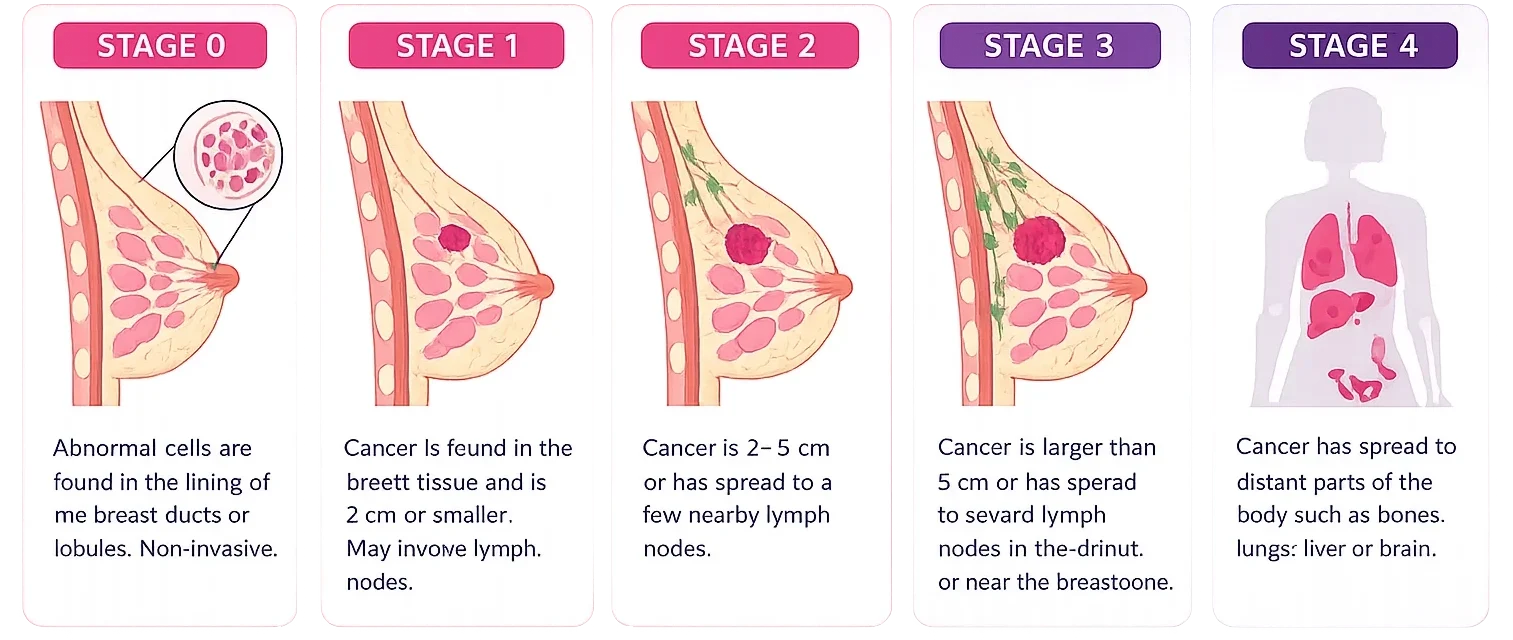
Stage 0 | Also known as non-invasive breast cancer, Stage 0 means abnormal cells are present within the milk ducts but have not spread to surrounding breast tissue. Treatment at this stage is often highly successful. |
Stage I | The tumour is small and confined to the breast or has spread only minimally to nearby lymph nodes. Early diagnosis and treatment at this stage generally lead to excellent outcomes. |
Stage II | The cancer may be larger than Stage I or may have spread to a few nearby lymph nodes. Despite being more advanced, Stage II breast cancer is still highly treatable with appropriate care. |
Stage III | Known as locally advanced breast cancer, Stage III means the cancer has spread to multiple lymph nodes or nearby tissues around the breast but has not spread to distant organs. |
Stage IV | Also called metastatic breast cancer, Stage IV occurs when the cancer has spread beyond the breast and nearby lymph nodes to other parts of the body, such as the bones, liver, lungs, or brain. Treatment focuses on controlling the disease and improving quality of life. |
Breast Cancer Treatment in Bangalore
Breast cancer treatment is highly personalized and depends on several factors, including the type of breast cancer, its stage, tumour characteristics, and the patient’s overall health. At Healius Cancer & Hematology Clinics, every treatment plan is carefully designed by an experienced Breast Cancer Specialist to ensure the best possible outcomes. Advances in cancer care have made it possible to treat breast cancer more effectively while preserving quality of life and supporting faster recovery.
Surgery
- Surgery is often the primary treatment for breast cancer, especially in early-stage cases.
- The goal is to remove the tumour while preserving as much healthy breast tissue as possible.
- Depending on the extent of the disease, breast-conserving surgery or mastectomy may be recommended.
Chemotherapy
- Chemotherapy uses anti-cancer drugs to destroy cancer cells throughout the body.
- It may be given before surgery to shrink the tumour or after surgery to reduce the risk of recurrence.
- Treatment is planned based on the type and stage of breast cancer.
Radiation Therapy
- Radiation therapy uses high-energy beams to target and destroy cancer cells.
- It is commonly recommended after surgery to eliminate any remaining cancer cells.
- This treatment helps reduce the chances of the cancer returning.
Hormone Therapy
- Hormone therapy is used for hormone receptor-positive breast cancers.
- It works by blocking or lowering hormone levels that help cancer cells grow.
- Treatment may continue for several years to reduce the risk of recurrence.
Targeted Therapy
- Targeted therapy focuses on specific proteins or genetic changes that drive cancer growth.
- It helps attack cancer cells while causing less damage to healthy tissues.
- This treatment is often used for specific types of breast cancer, such as HER2-positive breast cancer.
Immunotherapy
- Immunotherapy helps the body’s immune system recognize and fight cancer cells.
- It may be recommended for certain advanced or aggressive forms of breast cancer.
- Treatment is usually combined with other therapies to improve outcomes.
What Is Breast Cancer?
It is characterized by uncontrolled cell multiplication within the breast, which commonly presents as a lump. Cancer is essentially uncontrolled cell multiplication. Once the cells multiply, they move to distant locations via blood or lymph. Any organ in the human body can be affected by cancer cells. The breast is one of the most commonly affected organs by cancer, and it has gotten a lot of attention.
Types Of Breast Cancers
- Invasive ductal carcinoma
- Invasive lobular carcinoma
- Lobular carcinoma in situ
- Ductal carcinoma in situ
- Phyllodes tumor
- Angiosarcoma
Breast Cancer Symptoms
An asymptomatic lump is the most prevalent mode of presentation of this cancer. The lumps are usually painless; however, this is not a deciding factor for cancer treatment. Some lumps are so minute that they can only be noticed on a mammogram and cannot be felt by the hand. On the other side, if a lump is ignored, it might expand to the point where it causes skin involvement and ulceration. Patients may present with symptoms of metastases such as a pathological bone fracture, and upon further investigation, a breast lump may be discovered.
Breast Cancer Causes
Though many factors are known to causes predispose a lady to develop this disease, we cannot pinpoint specific factors in most ladies who develop this disease. Certain instances run in families, but this does not mean that one is likely to get the disease just because a close relative has a history or has undergone breast cancer treatment. The majority of the women who develop this disease do not have a genetic component. Genetic tests to look for mutations may be performed if there is an exceptionally high incidence of the family history. Similarly, there are other risk factors like the use of estrogen replacement pills after menopause, early menarche, and late menopause, and not having to breastfeed the children. These factors, too, are known to predispose females to this disease but need not be present in everyone suffering from this disease. Breast cancer awareness will assist females in detecting the disease early, reducing the burden of treatment, and improving treatment outcomes as this cancer is becoming more prevalent.
Why Choose Healius For Breast Cancer Treatment?
Choosing the right team for breast cancer care can make a significant difference to both treatment outcomes and the overall patient experience. At Healius Cancer & Hematology Clinics, we combine specialist expertise, advanced technology, and personalized care to support patients at every stage of their journey. Your search for a trusted Breast Cancer Specialist, offering comprehensive breast cancer treatment in Bangalore ends at Healius. Our focus remains on delivering care that is tailored to your unique diagnosis and needs.
Multidisciplinary Cancer Care
Every patient benefits from the expertise of surgical oncologists, medical oncologists, radiation oncologists, pathologists, and imaging specialists working together to create an individualized treatment plan.
Personalized Treatment Approach
No two breast cancer cases are alike. We carefully evaluate the type, stage, and biological characteristics of the cancer to recommend the most appropriate breast cancer treatment for each patient.
Expertise in Breast Cancer Surgery
Our specialists are experienced in performing advanced breast cancer surgery with a focus on effective cancer removal, faster recovery, and preserving quality of life wherever possible.
Advanced Diagnostics & Treatment Planning
Accurate diagnosis is the foundation of successful treatment. We utilize advanced diagnostic tools and evidence-based protocols to ensure informed treatment decisions.
Patient-Centric Support
From the first consultation to post-treatment follow-ups, our team provides continuous guidance, education, and emotional support to help patients and their families navigate treatment with confidence.
Focus on Long-Term Outcomes
Our goal extends beyond treating cancer. We focus on improving survival outcomes, reducing the risk of recurrence, and helping patients return to their everyday lives with confidence and peace of mind.
FAQ
Frequently Asked Questions
Who is at risk for getting breast cancer?
Several factors can increase the risk of breast cancer, including increasing age, a family history of breast cancer, inherited genetic mutations, hormonal factors, obesity, and certain lifestyle habits. However, breast cancer can also occur in people with no known risk factors.
Are there any side effects of breast cancer treatment?
Side effects can vary depending on the treatment. Common side effects may include fatigue, nausea, hair loss, skin irritation, swelling, or hormonal changes. Most side effects can be managed with proper medical support.
Does breast cancer treatment require surgery?
Not always, while breast cancer surgery is often recommended for many patients, treatment may also involve chemotherapy, radiation therapy, hormone therapy, targeted therapy, or a combination of these approaches. The treatment plan depends on the type and stage of breast cancer.
When should I consult a breast cancer specialist?
You should consult a breast cancer specialist if you notice a lump in your breast, changes in breast shape or size, nipple discharge, persistent breast pain, or any unusual changes in breast tissue. Early evaluation can help ensure timely diagnosis and access to appropriate treatment options.
How do I choose the right breast cancer specialist in bangalore?
When choosing a breast cancer specialist in bangalore, it is important to consider the specialist’s experience, expertise in breast cancer management, access to multidisciplinary care, and the availability of advanced treatment options. A personalized approach to treatment is equally important.
How long does breast cancer treatment take?
The duration of breast cancer treatment varies from patient to patient. Some treatments may take a few weeks, while others, such as hormone therapy, may continue for several years as part of long-term cancer management.
