
Comprehensive Care for Your Colon Cancer Treatment
The colon plays an important role in the digestive system and helps the body absorb water and process waste. When cancer develops in the colon, it can affect how the organ functions and may require timely medical attention. Once colon cancer is diagnosed, the treatment approach depends on several factors, including the stage and location of the cancer, how far it has spread and the patient’s overall health. Understanding these factors helps doctors determine the most appropriate way to treat the condition.
At Healius, we provide specialised colon cancer treatment in Bangalore with care tailored to each patient’s condition. Our team of cancer specialists evaluates every case carefully before recommending a suitable treatment plan. By bringing together specialist expertise, advanced medical facilities and coordinated care, we aim to support patients through their treatment journey while keeping their individual needs at the centre of care.
What Are The Causes of Colon Cancer?
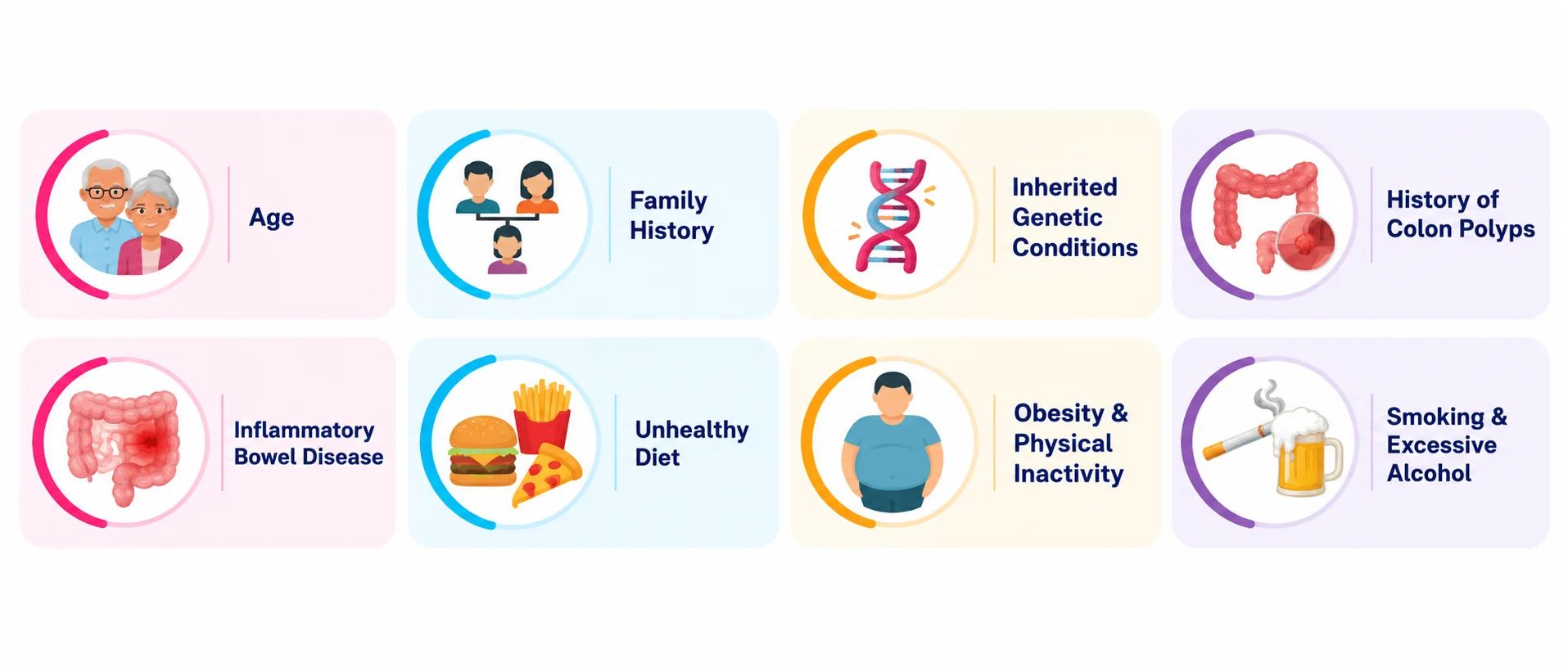
Colon cancer does not have one specific cause. It usually develops due to a combination of genetic, lifestyle and medical factors that can increase the risk of abnormal cell growth in the colon.
- Age: The risk of colon cancer increases with age, although it can also occur in younger adults.
- Family History: Having a close family member with colon cancer or certain types of colon polyps can increase your risk.
- Inherited Genetic Conditions: Conditions such as Lynch syndrome and familial adenomatous polyposis (FAP) can significantly increase the likelihood of developing colon cancer.
- History of Colon Polyps: Certain types of polyps can become cancerous over time, particularly when they are not detected and removed.
- Inflammatory Bowel Disease: Long-term conditions such as ulcerative colitis and Crohn’s disease can increase the risk of colon cancer.
- Unhealthy Diet: A diet high in processed meats and red meat, and low in fibre, may increase the risk of developing colon cancer.
- Obesity & Physical Inactivity: Being overweight and having a sedentary lifestyle are associated with a higher risk of colon cancer.
- Smoking & Excessive Alcohol: Long-term smoking and heavy alcohol consumption can increase the risk of colon cancer and other cancers.
What are the Symptoms of Colon Cancer?
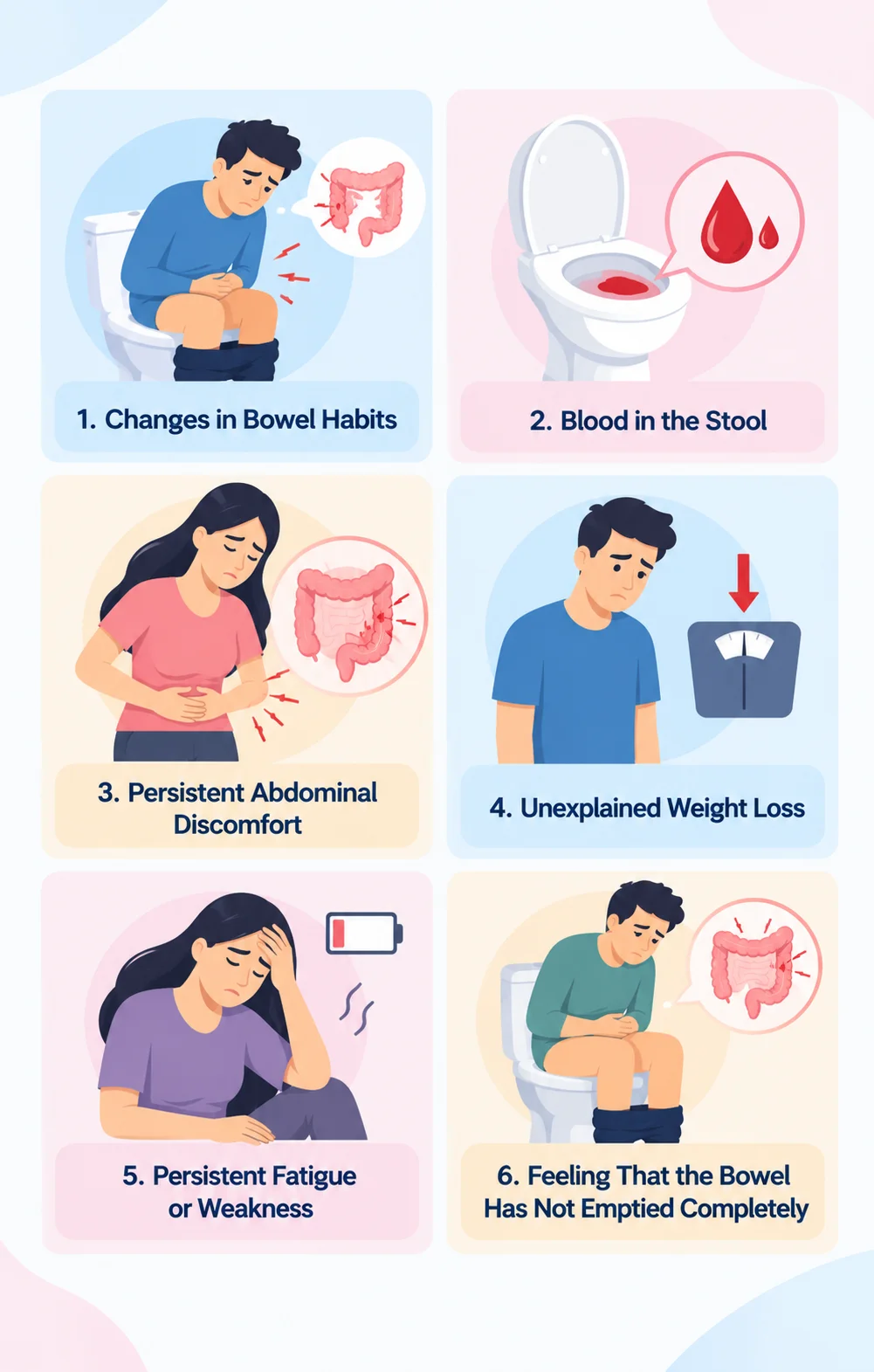
Colon cancer may not cause noticeable symptoms in its early stages, which is why regular screening can be important, especially for people at higher risk. When symptoms do appear, they can vary depending on the location and progression of the cancer.
- Changes in Bowel Habits: Persistent changes such as diarrhoea, constipation or a change in the usual frequency or consistency of stools may occur.
- Blood in the Stool: Blood may appear as bright red blood or make the stool look dark or tarry.
- Persistent Abdominal Discomfort: Ongoing cramps, abdominal pain, bloating or discomfort can sometimes be associated with colon cancer.
- Unexplained Weight Loss: Losing weight without changes to your diet or exercise routine may be a warning sign.
- Persistent Fatigue or Weakness: Colon cancer can cause blood loss and anaemia, which may lead to unusual tiredness, weakness or reduced energy.
- Feeling That the Bowel Has Not Emptied Completely: You may feel the need to have a bowel movement even after using the toilet, or experience a persistent urge to pass stool.
Are There Different Stages of Colon Cancer?
Yes, colon cancer is classified into different stages based on how deeply it has grown into the colon wall and whether it has spread to nearby lymph nodes or other parts of the body. Understanding the stage helps doctors determine the most appropriate treatment approach.
Stage | What It Means |
Stage 0 | Cancer cells are limited to the innermost lining of the colon and have not grown into deeper tissues. |
Stage I | The cancer has grown into the inner layers of the colon wall but has not spread to nearby lymph nodes or distant organs. |
Stage II | The cancer has grown further through the colon wall but has not spread to nearby lymph nodes. It is divided into Stage IIA, IIB and IIC based on how deeply the cancer has grown. |
Stage III | The cancer has spread to nearby lymph nodes but has not spread to distant organs. It is further divided into Stage IIIA, IIIB and IIIC depending on the extent of spread. |
Stage IV | The cancer has spread to distant parts of the body, such as the liver or lungs. It is classified as Stage IVA, IVB or IVC depending on where and how extensively it has spread. |
What Are the Options for Colon Cancer Treatment in Bangalore?
The treatment recommended for colon cancer depends on factors such as the stage of the disease, tumour location, overall health and whether the cancer has spread. Depending on the individual case, doctors may recommend one treatment or a combination of approaches.
1. Colon Cancer Surgery
- Surgery is one of the main treatments for colon cancer, particularly when the tumour is localised and can be removed.
- The procedure involves removing the section of the colon containing the tumour along with nearby tissues and lymph nodes when required.
- The healthy ends of the colon may then be joined together to restore bowel function.
- In some cases, a temporary or permanent colostomy may be required depending on the location and extent of the cancer.
- The type of surgery recommended depends on the tumour’s size, location and stage.
2. Colon Cancer Chemotherapy
- Colon cancer chemotherapy uses medicines to destroy cancer cells or slow their growth.
- It may be recommended after surgery to reduce the risk of cancer returning, particularly in certain Stage II and Stage III cancers.
- Chemotherapy may also be used before surgery in selected cases to shrink the tumour.
- For advanced colon cancer, chemotherapy can help control the disease and manage symptoms.
- The medicines, dosage and duration are selected based on the patient’s condition and treatment goals.
3. Colon Cancer Immunotherapy
- Colon cancer immunotherapy helps the body’s immune system recognise and attack cancer cells.
- It may be considered for certain advanced colon cancers with specific molecular characteristics.
- Tests may be performed to determine whether the tumour has biomarkers that indicate a likely response to immunotherapy.
- Immunotherapy can sometimes be used when conventional treatments are not suitable or when the cancer has progressed.
- The type and duration of treatment depend on the cancer’s characteristics and the patient’s overall health.
4. Colon Cancer Targeted Therapy
- Colon cancer targeted therapy focuses on specific proteins, genes or pathways that help cancer cells grow and survive.
- It may be considered for advanced or metastatic colon cancer when testing identifies suitable molecular targets.
- Targeted medicines can be used alone or alongside chemotherapy, depending on the patient’s condition.
- Molecular and biomarker testing can help doctors determine whether a patient is likely to benefit from a particular targeted treatment.
- The choice of therapy depends on factors such as the tumour’s genetic profile, stage and previous treatments.
5. Radiation Therapy
- Radiation therapy uses high-energy radiation to damage and destroy cancer cells.
- It is used less frequently for colon cancer than for rectal cancer, but may be considered in selected situations.
- It can sometimes be used when a tumour has grown into nearby structures and requires local control.
- Radiation may also be used to relieve symptoms caused by advanced cancer.
- The treatment plan is tailored according to the tumour’s location, extent and the patient’s overall treatment plan.
Why Choose Healius for Colon Cancer Treatment in Bangalore?
Experienced Cancer Specialists
Our experienced cancer specialists evaluate each patient’s condition, stage and overall health before recommending a treatment approach. This helps ensure that care is planned around the patient’s specific needs.
Personalised Treatment Plans
Colon cancer can affect patients differently, so treatment needs to be tailored accordingly. At Healius, treatment plans are developed based on the patient’s diagnosis, tumour characteristics and overall health.
Multidisciplinary Cancer Care
Colon cancer treatment may involve different areas of medical expertise depending on the stage and treatment requirements. Our multidisciplinary approach brings the relevant specialists together to support coordinated decision-making.
Advanced Diagnostic & Treatment Facilities
Accurate diagnosis and staging are important for determining the most appropriate treatment. Healius offers modern diagnostic and treatment facilities to support comprehensive cancer care.
Comprehensive Patient Support
Cancer treatment involves more than medical procedures and medications. We focus on keeping patients informed and supported throughout their treatment, from the initial consultation through follow-up care.
FAQ
Frequently Asked Questions
Can colon cancer be detected early?
Yes, colon cancer can often be detected early through screening and diagnostic tests, even before symptoms appear. Early detection can help doctors identify the disease at a stage when treatment may be more manageable.
What tests are used to plan colon cancer treatment?
Doctors may use imaging scans, colonoscopy, biopsy and other laboratory or molecular tests to understand the cancer. These results help determine the extent of the disease and guide treatment decisions.
Can colon cancer spread to the liver or lungs?
Yes, advanced colon cancer can spread to distant organs, with the liver and lungs being common sites. When this happens, doctors consider the location and extent of the spread while planning treatment.
Can colon cancer return after treatment?
There is a possibility of colon cancer returning after treatment, although the risk varies from person to person. Regular follow-up appointments help doctors monitor for recurrence and address any concerns early.
What are the side effects of colon cancer treatment?
Side effects depend on the type of treatment and can vary between patients. Your medical team can explain the possible effects of your specific treatment and help manage them during care.
How do I find the right colon cancer treatment in Bangalore?
The right colon cancer treatment depends on factors such as the stage of cancer, tumour characteristics, overall health and the treatment options available. At Healius, experienced cancer specialists evaluate each patient’s condition and develop a personalised treatment plan based on their specific needs, with access to comprehensive cancer care throughout the treatment journey.
