
What Is Stomach Cancer?
Stomach cancer, or gastric cancer, occurs when abnormal cells develop in the tissues of the stomach and begin multiplying faster than normal cells. These cells can eventually form a cancerous growth that affects how the stomach functions and, in some cases, spreads to other organs. The disease can develop in different parts of the stomach, but it most commonly starts in the lining that comes into contact with food.
Because the stomach is a key part of the digestive system, changes within it can sometimes affect how a person eats, digests food, and absorbs nutrients. In the early stages, these changes may be subtle, making them easy to dismiss as minor digestive concerns. Over time, however, symptoms may become more frequent and noticeable.
At Healius Cancer & Hematology Clinics, stomach cancer treatment begins with understanding the complete picture, not just the diagnosis. Our specialists use advanced diagnostics and a multidisciplinary approach to evaluate the condition, determine its stage, and recommend a treatment plan tailored to the patient’s specific needs. From diagnosis to ongoing care, every decision is guided by clinical expertise and patient-focused support.
What Causes Stomach Cancer?
Stomach cancer, or gastric cancer, develops when cells in the stomach undergo changes that cause them to grow and multiply uncontrollably. While there is no single cause of stomach cancer, several factors have been linked to an increased risk of developing the disease. These risk factors can damage the stomach lining, trigger chronic inflammation, or contribute to genetic changes within stomach cells over time.
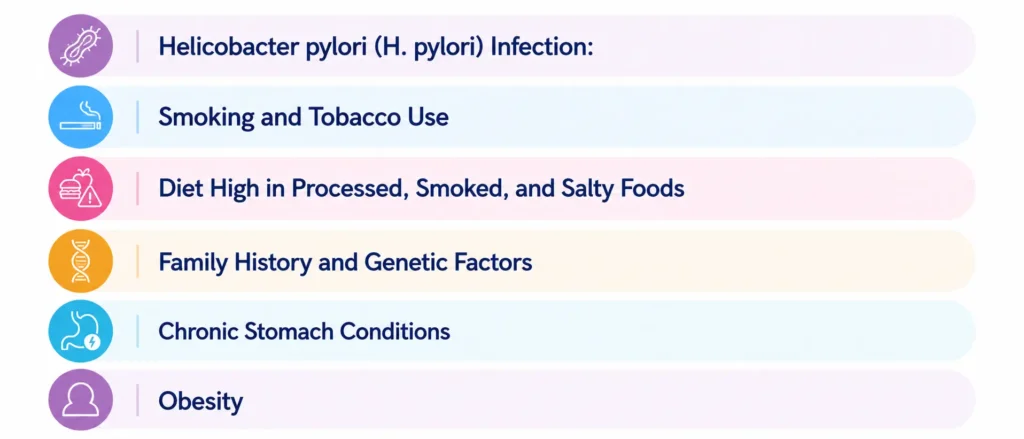
Helicobacter pylori (H. pylori) Infection: A long-term H. pylori infection is one of the most significant risk factors for stomach cancer. The bacteria can cause chronic inflammation and damage to the stomach lining, which may lead to precancerous changes over time.
Smoking and Tobacco Use: Tobacco contains harmful chemicals that can damage stomach tissues and increase the likelihood of abnormal cell growth. People who smoke are at a higher risk of developing stomach cancer compared to non-smokers.
Diet High in Processed, Smoked, and Salty Foods: Frequent consumption of processed meats, smoked foods, and foods high in salt may increase gastric cancer risk. These dietary habits can irritate the stomach lining and contribute to long-term cellular damage.
Family History and Genetic Factors: A family history of stomach cancer may increase a person’s risk of developing the disease. Certain inherited genetic conditions can also make some individuals more susceptible to stomach cancer.
Chronic Stomach Conditions: Long-standing stomach conditions such as chronic gastritis, stomach ulcers, and other inflammatory disorders can increase the risk of cancer by causing ongoing damage to the stomach lining.
Obesity: Excess body weight has been associated with a higher risk of several cancers, including stomach cancer. Obesity can contribute to chronic inflammation and other changes within the body that may promote cancer development.
What Are The Early Signs And Symptoms Of Cancer?
Stomach cancer often develops gradually, and its early symptoms can be easy to overlook because they closely resemble common digestive problems. Many people may experience mild discomfort for weeks or months before seeking medical attention. While these symptoms do not always indicate stomach cancer, persistent or worsening symptoms should be evaluated by a healthcare professional. Recognising the early warning signs can help support timely diagnosis and treatment.
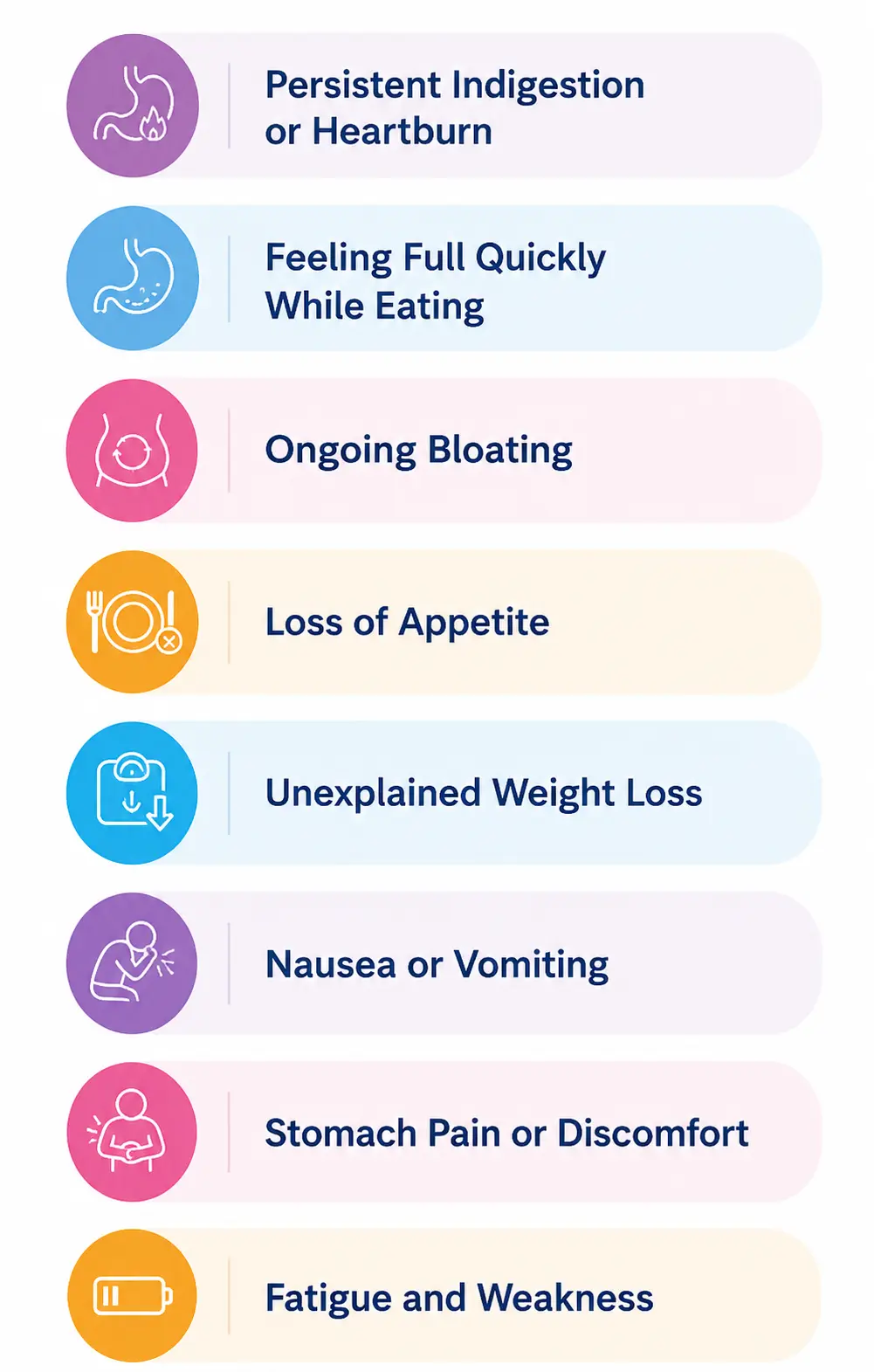
Persistent Indigestion or Heartburn: Frequent indigestion, acidity, or heartburn that does not improve with routine treatment may be an early sign of stomach cancer. Unlike occasional digestive discomfort, these symptoms tend to persist over time.
Feeling Full Quickly While Eating: Many people with stomach cancer experience early satiety, meaning they feel full after eating only a small amount of food. This can gradually affect appetite and nutritional intake.
Ongoing Bloating: Persistent bloating, especially after meals, may occur when stomach cancer affects normal digestion. This symptom is often mistaken for a common digestive issue in the early stages.
Loss of Appetite: A noticeable decrease in appetite or a lack of interest in food can be an early warning sign. Some individuals may find themselves eating less without a clear reason.
Unexplained Weight Loss: Losing weight without changes in diet, exercise, or lifestyle should never be ignored. Unexplained weight loss is a common symptom associated with many cancers, including stomach cancer.
Nausea or Vomiting: Frequent nausea or episodes of vomiting may occur as the cancer grows and affects the stomach’s normal function. In some cases, vomiting may become more persistent over time.
Stomach Pain or Discomfort: Persistent pain, pressure, or discomfort in the upper abdomen may be an indication of an underlying stomach condition, including stomach cancer. The pain may range from mild to severe depending on the stage of the disease.
Fatigue and Weakness: Cancer can affect the body’s ability to absorb nutrients and produce healthy blood cells, leading to ongoing tiredness, weakness, and reduced energy levels.
What Causes Stomach Cancer?
Stomach cancer treatment is tailored to each patient’s diagnosis, stage of cancer, overall health, and treatment goals. At Healius Cancer & Hematology Clinics, a multidisciplinary team works together to create a personalised treatment plan that focuses on effective cancer management while supporting the patient’s quality of life throughout the treatment journey.
Step 1: Diagnosis and Cancer Staging
The first step is to confirm the diagnosis and determine how far the cancer has spread. This helps doctors identify the most suitable treatment approach. This stage may include:
- Endoscopy to examine the stomach lining.
- Biopsy to confirm the presence of cancer cells.
- CT scans, PET scans, or other imaging tests.
- Blood tests to assess overall health.
- Cancer staging to understand the extent of the disease.
Step 2: Personalised Treatment Planning
Once the diagnosis is confirmed, a multidisciplinary team reviews the case and develops a treatment strategy tailored to the patient’s condition. The treatment plan is based on:
- The type and stage of stomach cancer.
- The tumour’s location within the stomach.
- Whether the cancer has spread.
- The patient’s age and overall health.
- Individual treatment goals and preferences.
Step 3: Pre-Surgical Therapy (When Required)
For some patients, treatment may begin before surgery to reduce the size of the tumour and improve the chances of successful removal. This may involve:
- Chemotherapy to shrink the tumour.
- Targeted therapy for eligible patients.
- Reducing the risk of cancer spread.
- Improving surgical outcomes.
- Preparing the body for the next stage of treatment.
Step 4: Surgery and Additional Cancer Treatment
Surgery is often the main treatment for stomach cancer, especially when the disease is confined to the stomach or nearby tissues. Depending on the diagnosis, additional therapies may be recommended after surgery. Treatment may include:
- Partial or total gastrectomy to remove the tumour.
- Removal of nearby lymph nodes.
- Post-surgical chemotherapy to lower recurrence risk.
- Radiation therapy in selected cases.
- Targeted therapy or immunotherapy when appropriate.
Step 5: Recovery, Follow-Up, and Ongoing Care
After treatment, regular follow-up care helps monitor recovery, manage side effects, and detect any signs of recurrence at an early stage. Follow-up care typically includes:
- Routine health assessments.
- Periodic scans and diagnostic tests.
- Nutritional counselling and dietary support.
- Symptom management and rehabilitation.
- Long-term monitoring for recurrence and overall well-being.
Options Under Stomach Cancer Treatment in Bangalore?
Stomach cancer treatment depends on several factors, including the type of cancer, its stage, its location within the stomach, and the patient’s overall health. In many cases, a combination of treatments may be recommended to achieve the best possible outcomes.At Healius Cancer & Hematology Clinics, stomach cancer treatment in Bangalore is personalised and developed by a multidisciplinary team to ensure patients receive care tailored to their specific needs.
Surgery
- Surgery is often the primary treatment for stomach cancer, particularly when the disease is diagnosed at an early stage or remains confined to the stomach.
- Depending on the size and location of the tumour, surgeons may remove part of the stomach (partial gastrectomy) or the entire stomach (total gastrectomy).
- Nearby lymph nodes may also be removed to determine whether the cancer has spread.
Chemotherapy
- Chemotherapy uses anti-cancer drugs to destroy cancer cells or slow their growth.
- It may be administered before surgery to shrink the tumour, after surgery to reduce the risk of recurrence, or as a primary treatment for advanced stomach cancer.
- Chemotherapy is often used in combination with other treatment approaches to improve effectiveness.
Radiation Therapy
- Radiation therapy uses high-energy radiation beams to target and destroy cancer cells.
- It may be recommended before surgery to shrink a tumour, after surgery to eliminate any remaining cancer cells, or alongside chemotherapy as part of a comprehensive treatment plan.
- In advanced cases, it may also help manage symptoms and improve comfort.
Targeted Therapy
- Targeted therapy focuses on specific proteins or genetic changes that contribute to cancer growth.
- These treatments are used when specialised testing identifies particular biomarkers within the tumour.
- By targeting cancer cells more precisely, targeted therapies can improve treatment outcomes while minimising damage to healthy tissues.
Immunotherapy
- Immunotherapy for stomach cancer helps the body’s immune system recognise and attack cancer cells more effectively.
- It is typically recommended for certain advanced or recurrent stomach cancers that meet specific eligibility criteria.
- In some cases, immunotherapy for stomach cancer may be combined with chemotherapy or other treatments to enhance results.
Stomach Cancer Treatment Without Chemotherapy
- Endoscopic removal or partial/total gastrectomy may be considered when the cancer is localised and can be completely removed.
- Immunotherapy may be considered for certain stomach cancers, particularly when biomarkers such as MSI-H or dMMR are present.
- Targeted medicines may be an option when testing identifies specific markers or genetic changes, such as HER2 or CLDN18.2.
Why Choose Healius For Gastric Cancer Treatment?
Why Choose Healius for Stomach Cancer Treatment? | How It Benefits Patients |
Multidisciplinary Gastrointestinal Cancer Expertise | Stomach cancer treatment involves collaboration between surgical, medical, and radiation oncologists, along with gastroenterologists and radiologists, ensuring every aspect of care is carefully planned. |
Advanced Diagnostic and Staging Capabilities | Accurate diagnosis and staging help determine the most effective treatment approach, enabling timely and informed clinical decisions. |
Personalised Treatment Planning | Every treatment plan is tailored based on the type, stage, location, and progression of the cancer, as well as the patient’s overall health and treatment goals. |
Comprehensive Treatment Options Under One Roof | Patients have access to surgery, chemotherapy, radiation therapy, targeted therapy, and immunotherapy, allowing for seamless and coordinated care throughout treatment. |
Specialised Care for Complex and Advanced Cases | The team is experienced in managing early-stage, locally advanced, recurrent, and metastatic stomach cancers using evidence-based treatment approaches. |
Integrated Nutritional and Supportive Care | Since stomach cancer can impact digestion and nutrition, patients receive comprehensive support to help manage symptoms, maintain strength, and improve recovery. |
Long-Term Follow-Up and Survivorship Care | Ongoing monitoring, rehabilitation support, and regular follow-ups help detect recurrence early and support patients beyond active treatment. |
FAQ
ask us anything
How is stomach cancer diagnosed?
Doctors typically diagnose stomach cancer using a combination of endoscopy, biopsy, blood tests, imaging scans such as CT or PET scans, and other diagnostic procedures. These tests help confirm the diagnosis and determine the stage of the cancer.
Can stomach cancer be cured?
Stomach cancer can often be treated successfully, especially when detected in its early stages. The chances of successful treatment depend on factors such as the stage of cancer, the patient’s overall health, and how the cancer responds to treatment.
How long does gastric cancer treatment take?
The duration of treatment varies based on the stage of the cancer and the treatment plan. Some patients may undergo treatment for several weeks, while others may require a combination of therapies over several months.
Who is at a higher risk of developing stomach cancer?
People with a family history of stomach cancer, long-term H. pylori infection, chronic gastritis, obesity, smoking habits, or diets high in processed and smoked foods may have a higher risk of developing the disease.
What foods should be avoided during stomach cancer treatment?
Patients are generally advised to limit highly processed foods, excessive salt, fried foods, and alcohol. A nutrition specialist can recommend a personalised diet based on the patient’s treatment plan and nutritional needs.
Is gastric cancer hereditary?
While most stomach cancers are not inherited, having a family history of stomach cancer can increase your risk. Certain inherited genetic syndromes may also make some individuals more susceptible to developing gastric cancer.
Can stomach cancer in old age be treated?
Yes, stomach cancer in older adults can be treated. Treatment depends on the cancer stage, overall health, nutritional status and treatment tolerance. Doctors may recommend surgery, chemotherapy, targeted therapy, immunotherapy or supportive care.
Know Our Experts

Dr. Mangesh. P. Kamath
MBBS, DNB (General Medicine), DM (Medical Oncology), MRCP (Med. Onco), ECMO (Med. Onco), PGDCR (Clinical Research)

Dr. Anil Kamath
M.S. (General Surgery) (Master of Surgery), MCh (Surgical Oncology), DNB (Surgical Oncology)

Dr. Siri Kamath
MBBS, DNB (Diabetology)

