
What is Thymoma Treatment?
A thymoma is a tumour that develops in the thymus, an organ situated in the upper chest, behind the breastbone. While some thymomas grow slowly and remain confined to the thymus, others may extend into surrounding tissues. Thymoma treatment is planned according to the tumour’s characteristics and how far it has progressed. Surgery may be recommended when the tumour can be removed safely, while radiation therapy or chemotherapy may be considered when additional treatment is needed. Regular monitoring is also important to check for recurrence after treatment.
Choosing the right treatment begins with understanding the condition and exploring the available options with a specialist. At Healius, patients seeking thymoma cancer treatment in Bangalore can receive guidance on the investigations and treatment approaches appropriate for their condition. The aim is to help patients understand their diagnosis, make informed decisions about their care, and follow a treatment plan suited to their individual needs.
What Are the Symptoms of Thymoma?
Thymoma may not cause noticeable symptoms in its early stages, and some tumours are discovered during imaging tests performed for other reasons. When symptoms occur, they may result from the tumour pressing against nearby structures in the chest or from associated conditions such as myasthenia gravis.
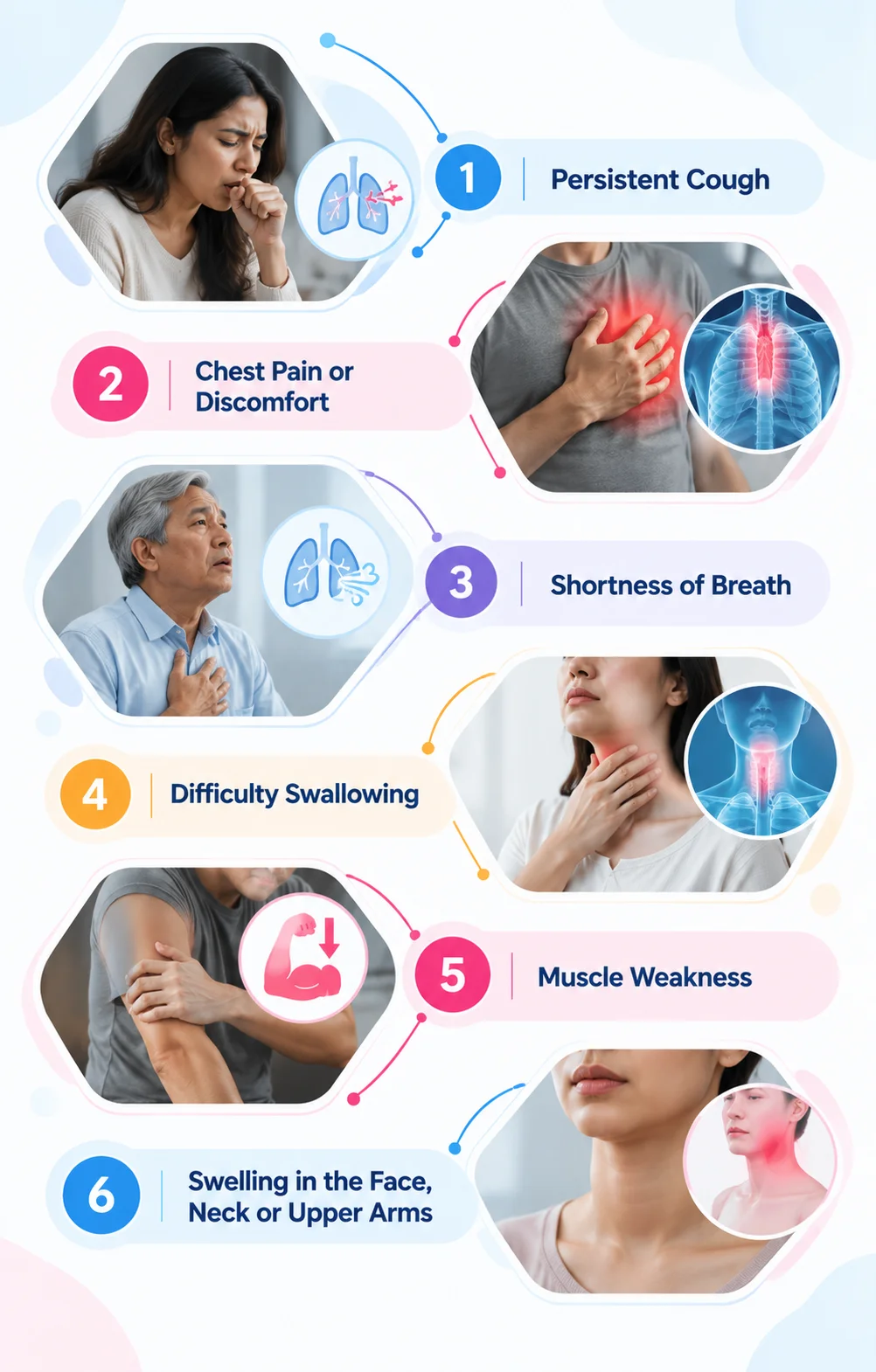
- Persistent Cough: A cough that does not go away may develop when the tumour presses against nearby airways.
- Chest Pain or Discomfort: Some people experience pain or pressure in the chest due to the tumour’s location behind the breastbone.
- Shortness of Breath: Breathing difficulties may occur if the tumour puts pressure on the airways or surrounding structures.
- Difficulty Swallowing: A thymoma that presses against the oesophagus may make swallowing uncomfortable or difficult.
- Muscle Weakness: Thymoma can be associated with myasthenia gravis, an autoimmune condition that may cause muscle weakness, drooping eyelids, double vision, or difficulty speaking.
- Swelling in the Face, Neck or Upper Arms: In some cases, the tumour may compress the superior vena cava, a major vein that carries blood from the upper body to the heart, causing swelling and sometimes visible veins in the chest or neck.
What Causes Thymoma?
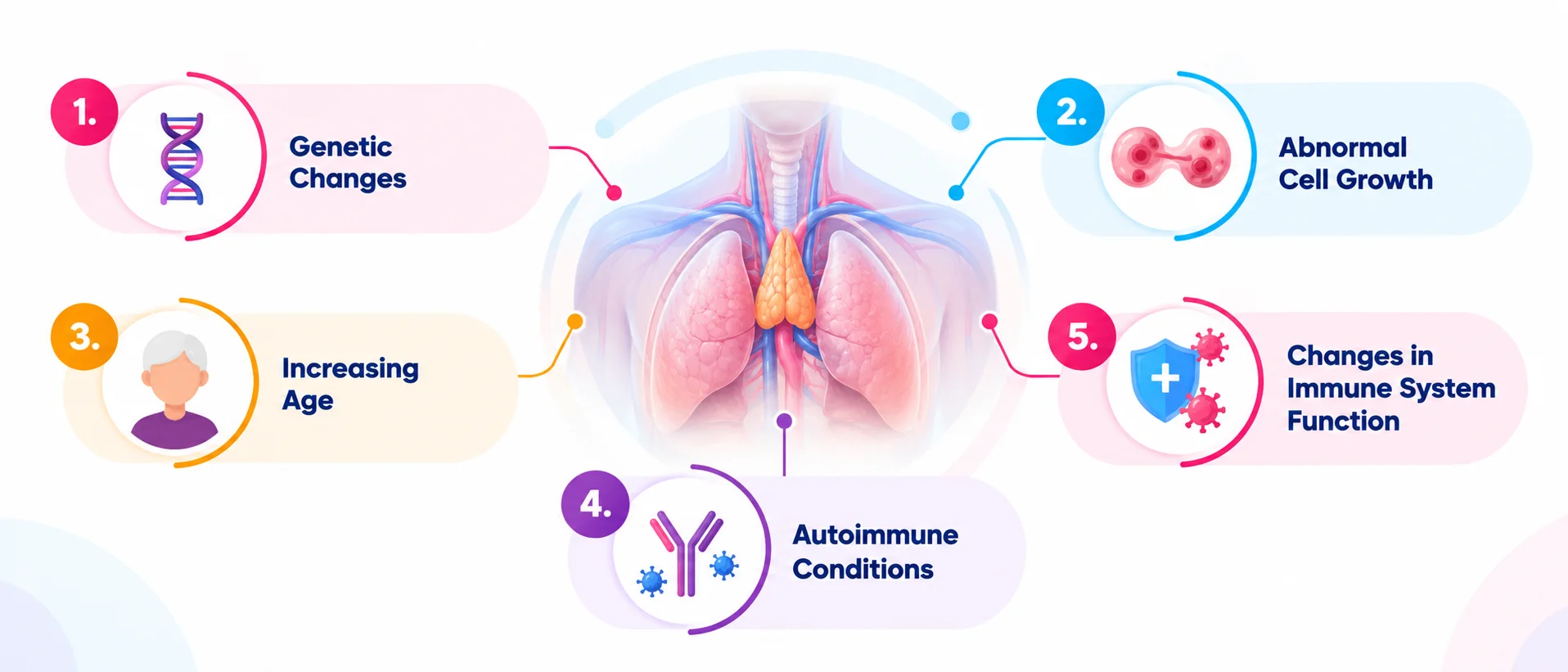
Thymoma develops when cells in the thymus undergo changes that cause them to grow abnormally and form a tumour. Given below are common causes that may lead to thymoma cancer:
- Genetic Changes: Changes in the DNA of thymic cells can affect how they grow and divide, potentially leading to tumour formation. Most thymomas are not known to result from an inherited genetic mutation.
- Abnormal Cell Growth: Thymoma develops when epithelial cells in the thymus grow abnormally and form a mass. The precise biological processes responsible for this growth remain under investigation.
- Increasing Age: Thymoma is more commonly diagnosed in middle-aged and older adults. However, age alone does not cause the condition, and it can occur in younger individuals as well.
- Autoimmune Conditions: Thymoma is associated with certain autoimmune disorders, particularly myasthenia gravis. This is an association rather than an established cause, and the relationship between the two conditions is complex.
- Changes in Immune System Function: The thymus plays an important role in the development of immune cells. Although thymic function and immune regulation are relevant to thymoma research, immune system changes have not been established as a direct cause.
What Tests Are Done During Diagnosis of Thymoma Treatment?
Diagnosing thymoma involves a combination of imaging tests, clinical assessments, and, when necessary, tissue examination to identify the tumour and determine its extent. These tests help the specialists understand the tumour’s size, location, and involvement with nearby structures before recommending an appropriate thymoma treatment plan.
- CT Scan of the Chest: A computed tomography (CT) scan helps identify a mass in the thymus, assess its size and location, and determine whether it may have spread to nearby tissues.
- MRI Scan: Magnetic resonance imaging (MRI) provides detailed images of soft tissues and may help doctors assess the tumour’s relationship with surrounding structures.
- PET-CT Scan: A positron emission tomography (PET-CT) scan may be recommended in selected cases to assess suspicious areas and investigate possible disease spread.
- Blood Tests: Blood tests help evaluate overall health and check whether the patient is fit for treatment. Additional tests may be recommended when an associated autoimmune condition is suspected.
- Myasthenia Gravis Testing: If symptoms such as muscle weakness, drooping eyelids, or double vision are present, doctors may recommend antibody blood tests and specialised nerve or muscle function tests to assess for myasthenia gravis.
- Biopsy and Histopathological Examination: In selected cases, a biopsy may be performed to examine tumour tissue under a microscope and establish the diagnosis. However, a biopsy is not always required before surgery when imaging strongly suggests a resectable thymoma and the specialist team recommends proceeding directly to removal.
Note: Not every patient requires all these tests. The tests selected depend on the imaging findings, symptoms, suspected tumour stage, and the medical assessment.
What Are The Options Under Thymoma Cancer Treatment in Bangalore?
Treatment Option | Description |
Thymoma Surgery (Thymectomy) | Surgery involves removing the thymoma and, when appropriate, the thymus gland. It is generally the preferred treatment for tumours that can be safely and completely removed. |
Minimally Invasive Thymoma Surgery | Techniques such as video-assisted thoracoscopic surgery (VATS) or robotic-assisted surgery may be considered for selected patients, depending on tumour size, location, and surgical suitability. |
Radiation Therapy | Radiation therapy uses high-energy radiation to destroy cancer cells. It may be recommended after surgery in selected cases or when the tumour cannot be completely removed. |
Chemotherapy for Thymoma | Chemotherapy uses medicines to destroy or control cancer cells. It may be used for advanced, unresectable, or recurrent thymoma and sometimes before surgery to help shrink the tumour. |
Chemoradiation | This approach combines chemotherapy and radiation therapy. It may be considered for selected patients with locally advanced thymoma, depending on the tumour’s extent and treatment goals. |
Treatment for Recurrent Thymoma | If thymoma returns after initial treatment, options may include further surgery, radiation therapy, chemotherapy, or other systemic treatments, depending on previous treatment and the location of recurrence. |
Active Surveillance | In selected cases, a specialist may recommend regular imaging and clinical follow-up to monitor the tumour before deciding whether treatment is necessary. |
Why Choose Healius for Thymoma Cancer Treatment?
Healius focuses on providing patients with appropriate care and guidance throughout their thymoma cancer treatment journey. From diagnostic evaluation to personalised treatment planning and follow-up care, the aim is to help patients understand their condition and explore suitable treatment options. Here are the key reasons to consider Healius for thymoma cancer treatment in Bangalore.
1. Experienced Oncology Specialists
- Access to specialists for evaluating thymoma and determining suitable treatment options.
- Assessment of the tumour’s stage, size, location, and involvement with surrounding tissues.
- Guidance on surgical and non-surgical treatment approaches based on individual needs.
- Coordination between relevant specialists for informed treatment decisions.
2. Comprehensive Cancer Diagnosis
- Diagnostic evaluation to help identify thymoma and assess its extent.
- Imaging investigations, such as CT scans and MRI, where clinically appropriate.
- Biopsy and pathology evaluation when required to confirm the diagnosis.
- Assessment of diagnostic findings to guide treatment planning.
3. Personalised Thymoma Treatment Plans
- Treatment recommendations based on the tumour’s stage and characteristics.
- Consideration of the patient’s medical history and overall health.
- Evaluation of suitable options, including surgery, radiation therapy, and chemotherapy.
- Treatment plans tailored to individual clinical needs and treatment goals.
4. Multidisciplinary Cancer Care
- Collaboration between relevant specialists when multiple treatment approaches are needed.
- Review of diagnostic findings to support treatment decisions.
- Evaluation of complex cases, including advanced or recurrent thymoma.
- Coordinated care focused on the patient’s diagnosis and treatment requirements.
5. Advanced Oncology Treatment Options
- Evaluation of appropriate treatment approaches based on tumour characteristics.
- Consideration of radiation therapy when clinically indicated.
- Assessment of minimally invasive surgical approaches for suitable patients.
- Selection of treatment methods based on clinical findings and individual needs.
6. Continued Monitoring and Follow-Up Care
- Follow-up consultations after treatment to assess recovery and overall health.
- Monitoring for possible recurrence through recommended investigations.
- Assessment of treatment response and potential side effects.
- Guidance on further care and monitoring based on the patient’s condition.
FAQ
Frequently Asked Questions
Is thymoma a slow-growing cancer?
Many thymomas grow slowly, but their behaviour varies. Some can invade nearby tissues or recur after treatment, so regular medical follow-up is important.
Can thymoma come back after surgery?
Yes, thymoma can recur even after surgery, sometimes several years later. Regular follow-up appointments and imaging tests help monitor for recurrence.
What is the cost of thymoma treatment in Bangalore?
The cost of thymoma treatment in Bangalore varies depending on the treatment required, tumour stage, diagnostic investigations, hospital stay, and follow-up care. A personalised estimate can be provided after medical evaluation.
Where can I consult a specialist for thymoma treatment in Bangalore?
If you are looking for thymoma treatment in Bangalore, Healius can help you explore available oncology services and understand the next steps based on your diagnosis. Through appropriate medical evaluation and treatment guidance, patients can learn about suitable care options tailored to their condition.
What happens if thymoma is left untreated?
The outcome depends on the tumour’s type, size, and growth pattern. Some tumours may remain stable for a period, while others can grow or invade nearby structures. A specialist can advise whether treatment or active surveillance is appropriate.
Can thymoma be completely cured?
Yes, some thymomas can be treated successfully, particularly when they are detected early and can be completely removed through surgery. However, outcomes depend on the tumour’s stage, characteristics, and response to treatment. Long-term monitoring may still be necessary.
