
What is Brain Tumor?
A brain tumor occurs when abnormal cells grow within the brain or in the tissues surrounding it. It may be benign or malignant, and its effects can depend on where it develops. Even a non-cancerous tumor can cause problems if it puts pressure on important areas of the brain. Some people may experience headaches, seizures, nausea, changes in vision, difficulty speaking, weakness, or problems with coordination. Because symptoms and tumor behaviour can vary widely, timely diagnosis is important for understanding what kind of treatment is needed.
At Healius, brain tumor treatment begins with an evaluation of the patient and the tumor. Our team considers factors such as the tumor type, grade, location, size, symptoms, and health before planning care. Treatment may include surgery, radiation therapy, chemotherapy, or a combination of approaches, depending on patient needs. With a personalised approach, we aim to support patients through diagnosis, treatment, recovery, and follow-up.
What Are the Different Types of Brain Tumors?
| Type of Brain Tumor | What It Is |
| Gliomas | Gliomas develop from glial cells, which support and protect nerve cells in the brain. They can range from slow-growing to aggressive tumors. |
| Meningiomas | Meningiomas develop in the meninges, the protective layers surrounding the brain and spinal cord. Many are benign, although some can be atypical or malignant. |
| Pituitary Tumors | These tumors develop in the pituitary gland at the base of the brain. They may affect hormone production and cause symptoms related to vision or hormonal changes. |
| Schwannomas | Schwannomas develop from Schwann cells, which form the protective covering around nerves. They are often benign and can affect hearing or balance when they involve the vestibular nerve. |
| Medulloblastomas | Medulloblastomas are fast-growing malignant tumors that develop in the cerebellum. They are more common in children but can also occur in adults. |
| Craniopharyngiomas | These tumors develop near the pituitary gland and can affect hormone function, vision, and other nearby structures. They are generally non-cancerous but may still require treatment. |
| Ependymomas | Ependymomas develop from cells lining the fluid-filled spaces of the brain and spinal cord. Their behaviour can vary depending on their type and grade. |
| Primary CNS Lymphomas | These are malignant tumors that begin in the lymphatic cells within the brain, spinal cord, or eyes. |
| Metastatic Brain Tumors | These are not primary brain tumors. They occur when cancer from another part of the body spreads to the brain. |
What Are The Symptoms of Brain Tumor?
The symptoms of a brain tumor can vary depending on its size, location, type, and rate of growth. Some symptoms may develop gradually, while others may become noticeable when the tumor affects a specific area or increases pressure within the brain.
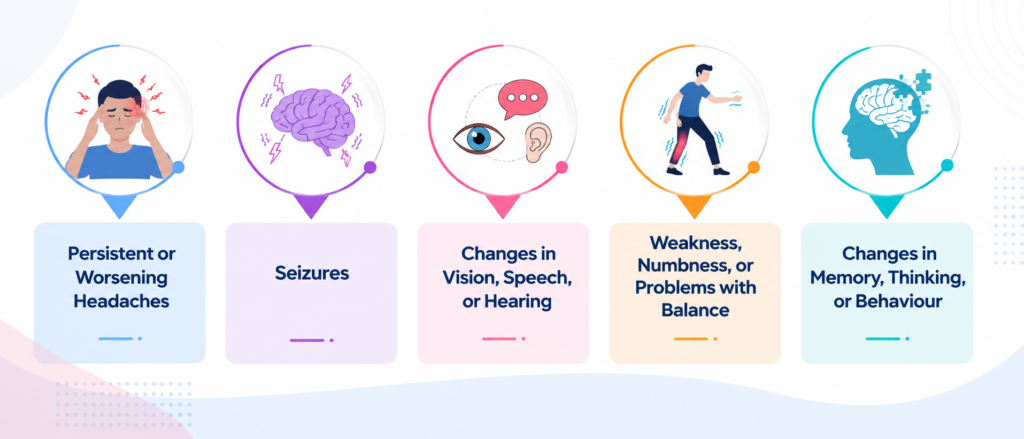
- Persistent or Worsening Headaches
- Headaches may become more frequent or feel different from the headaches a person usually experiences.
- They may gradually worsen over time or be accompanied by nausea and vomiting.
- A headache alone does not necessarily indicate a brain tumor, but persistent headaches along with other neurological symptoms should be medically evaluated.
- Seizures
- Brain tumors can disrupt the normal electrical activity of the brain, which may trigger seizures.
- A seizure can cause jerking movements, unusual sensations, staring spells, confusion, or temporary loss of awareness.
- In some cases, a first-time seizure may be one of the symptoms that leads to further evaluation and diagnosis.
- Changes in Vision, Speech, or Hearing
- A tumor affecting certain areas of the brain may cause blurred vision, double vision, or partial loss of vision.
- Some people may experience difficulty speaking clearly, finding the right words, or understanding language.
- Hearing changes or other sensory disturbances may also occur depending on the location of the tumor.
- Weakness, Numbness, or Problems with Balance
- A brain tumor can affect the areas responsible for movement, causing weakness or numbness in an arm, leg, or one side of the body.
- Some individuals may experience dizziness, difficulty walking, or problems with coordination and balance.
- Fine motor movements, such as writing or holding objects, may also become more difficult.
- Changes in Memory, Thinking, or Behaviour
- Some brain tumors may affect concentration, memory, or the ability to process information.
- A person may experience confusion, personality changes, unusual behaviour, or difficulty making decisions.
- These changes can be subtle at first and may gradually become more noticeable over time.
What Causes Brain Tumor?
In most cases, the exact cause of a brain tumor is not known. Brain tumors develop when cells in or around the brain undergo changes that cause them to grow and multiply abnormally. However, certain factors may be associated with an increased risk.
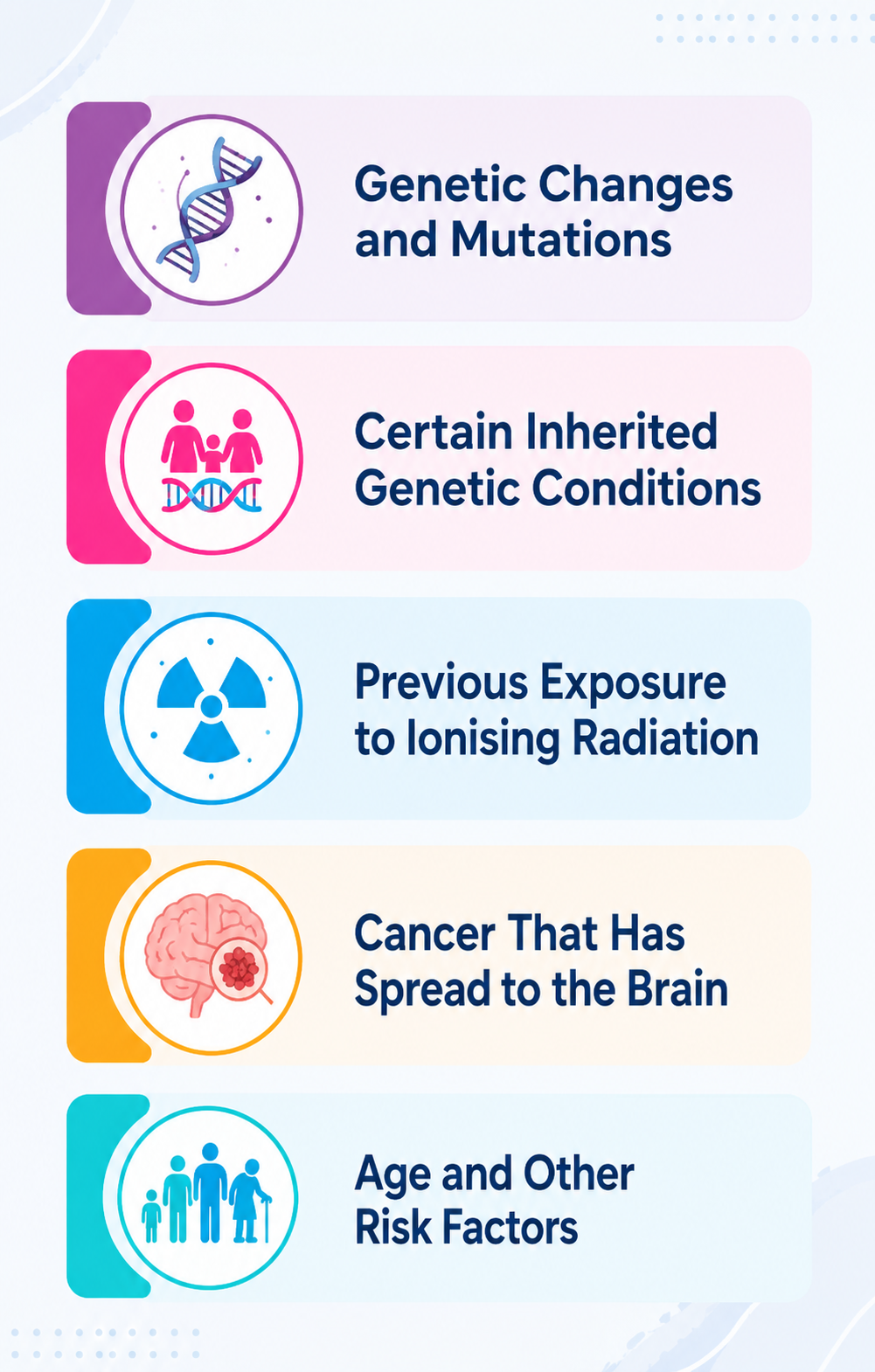
- Genetic Changes and Mutations: Changes or mutations in a cell’s DNA can cause it to grow and divide uncontrollably, potentially leading to the formation of a tumor. These genetic changes may occur during a person’s lifetime and are not always inherited.
- Certain Inherited Genetic Conditions: Some rare genetic syndromes may increase the risk of developing specific types of brain tumors. These include conditions such as neurofibromatosis, Li-Fraumeni syndrome, and tuberous sclerosis.
- Previous Exposure to Ionising Radiation: Exposure to high doses of ionising radiation, particularly radiation therapy to the head, may increase the risk of developing certain brain tumors later in life.
- Cancer That Has Spread to the Brain: Some tumors found in the brain are metastatic tumors, meaning that cancer has spread from another part of the body, such as the lungs, breast, or skin, to the brain.
- Age and Other Risk Factors: Certain types of brain tumors are more common at specific ages, while others may occur more frequently in people with particular genetic or medical risk factors. However, having a risk factor does not necessarily mean that a person will develop a brain tumor.
How is Brain Tumor Treatment Diagnosed?
1. Medical History and Neurological Examination
- The doctor may ask about symptoms such as persistent headaches, seizures, vision changes, weakness, or difficulties with balance and coordination.
- A neurological examination may be performed to assess brain and nervous system functions.
- This can include checking reflexes, muscle strength, balance, coordination, vision, hearing, and speech.
- The findings can help determine whether further tests and imaging are required.
2. Brain Imaging Tests
- An MRI scan is commonly used to obtain detailed images of the brain and identify the location and size of a tumor.
- In some cases, a contrast dye may be used to provide a clearer view of the tumor and surrounding tissues.
- A CT scan may also be recommended, particularly when additional information is needed or an MRI is not suitable.
- Imaging can also help doctors understand whether the tumor is affecting nearby brain structures.
3. Advanced Imaging and Functional Tests
- Advanced imaging techniques may help doctors study the tumor’s activity, blood supply, or relationship with surrounding brain tissue.
- Functional imaging may be useful when a tumor is located close to areas responsible for speech, movement, or other important functions.
- These tests can help specialists plan treatment while considering important areas of the brain.
- Not every patient requires advanced imaging, and the tests recommended will depend on the individual case.
4. Biopsy and Tissue Examination
- A biopsy involves removing a small sample of tumor tissue for laboratory examination.
- The sample may be collected through a dedicated biopsy procedure or during brain tumor surgery.
- A pathologist examines the tissue to identify the type of tumor and its characteristics.
- This information can help determine whether the tumor is benign or malignant and guide further treatment planning.
5. Molecular and Genetic Testing
- Molecular and genetic tests can identify specific changes within the tumor cells.
- These findings may provide more information about the tumor’s behaviour and classification.
- In some cases, molecular testing can help doctors determine suitable treatment options.
- The results are considered along with imaging, biopsy findings, symptoms, and the patient’s overall health to create an individualised treatment plan.
Why Choose Healius for Brain Tumor Treatment in Bangalore?
Choosing the right centre for brain tumor treatment is an important part of the treatment journey. Brain tumors can vary in their type, size, location, and behaviour, which is why patients may require a personalised and coordinated approach to care.
1. Multidisciplinary Approach to Brain Tumor Treatment
Brain tumor treatment may require the expertise of different specialists depending on the patient’s diagnosis. At Healius, a multidisciplinary approach helps bring together relevant specialists to evaluate the condition and plan the appropriate course of treatment. This ensures that different aspects of the patient’s diagnosis and treatment options are carefully considered.
2. Personalised Treatment Planning
No two brain tumors are exactly the same. Factors such as the type, size, location, grade of the tumor, symptoms, and the patient’s overall health can influence treatment decisions. At Healius, treatment plans are developed based on the individual’s diagnosis and specific clinical needs, helping patients receive care suited to their condition.
3. Comprehensive Brain Tumor Treatment Options
Depending on the type and characteristics of the brain tumor, treatment may involve different approaches. These can include surgery, radiation therapy, chemotherapy, targeted treatments, or a combination of therapies. The appropriate treatment is recommended after a detailed evaluation of the patient’s condition and treatment requirements.
4. Focus on Accurate Diagnosis and Treatment Planning
An accurate diagnosis plays an important role in determining the right approach to brain tumor treatment. Diagnostic evaluations can help specialists understand the tumor’s location, type, grade, and other important characteristics. This information helps guide treatment decisions and allows the care team to create a more informed treatment plan.
5. Support Throughout the Treatment Journey
Brain tumor treatment can involve several stages, from diagnosis and treatment planning to recovery and follow-up care. At Healius, the focus extends beyond the treatment itself, with continued guidance and supportive care throughout the patient’s journey. The aim is to help patients understand their treatment options and navigate each stage of care with the necessary medical support.
Frequently Asked Questions
Are all brain tumors cancerous?
No, not all brain tumors are cancerous. Some are benign, while others are malignant. However, even a benign brain tumor may require treatment if it affects important areas of the brain or causes symptoms.
What is the best brain tumor cancer treatment?
The most appropriate treatment depends on the type, size, location, and grade of the tumor, as well as the patient’s overall health. Treatment may involve surgery, radiation therapy, chemotherapy, targeted therapy, or a combination of these approaches.
Can a brain tumor cause headaches every day?
A brain tumor can cause persistent or worsening headaches, but headaches are also commonly caused by many other conditions. A headache alone does not indicate a brain tumor. If headaches are new, severe, progressively worsening, or accompanied by neurological symptoms, medical evaluation is important.
How long does recovery take after brain tumor treatment?
Recovery can vary significantly depending on the type of treatment received, the location of the tumor, and the patient’s overall health. Recovery after surgery, for example, may involve rehabilitation, follow-up appointments, and additional treatment when required.
Where can I get brain tumor treatment in Bangalore?
At Healius, patients can receive specialist evaluation and personalised treatment planning for brain tumors. Depending on the diagnosis, the care plan may involve coordination between relevant specialists and treatment approaches based on the patient’s individual needs.
Is brain cancer treatment different from brain tumor treatment?
Brain tumors can be benign or malignant, while brain cancer generally refers to malignant tumors. The treatment approach depends on the specific type and characteristics of the tumor. While some benign brain tumors may only require monitoring or surgery, malignant tumors may require a combination of treatments such as surgery, radiation therapy, and chemotherapy.
