
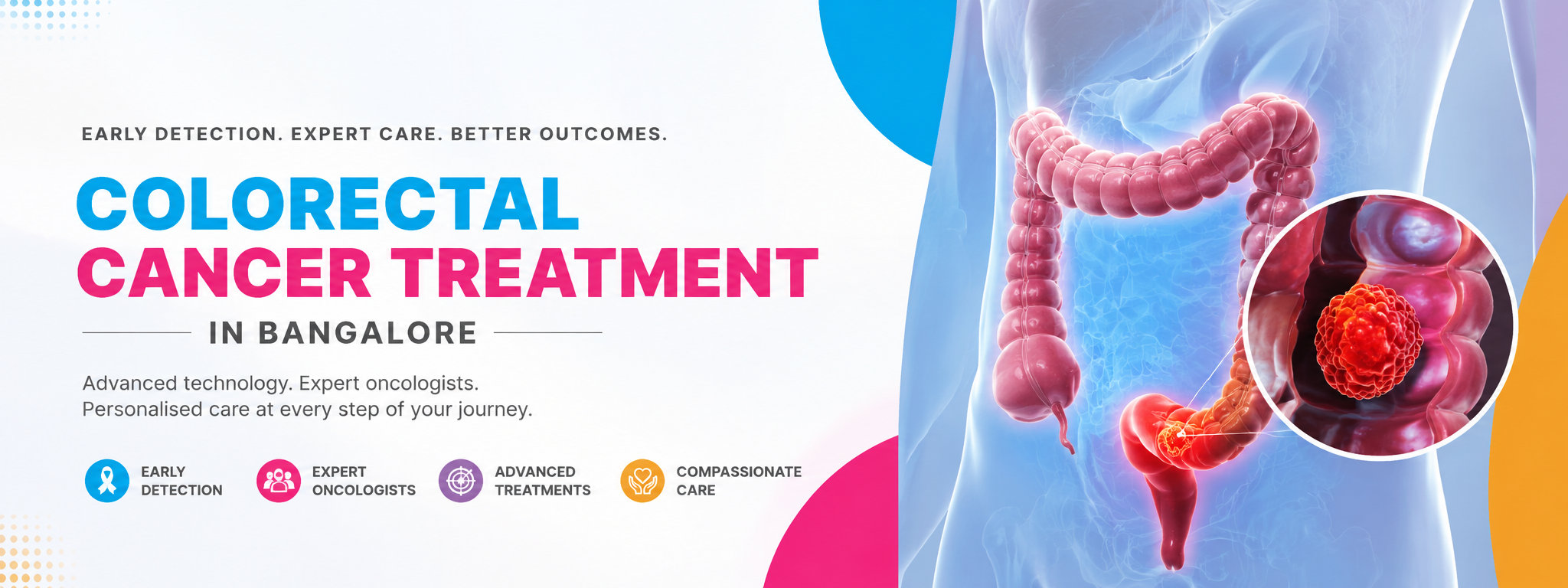

Colorectal Cancer Treatment in Bangalore
A colorectal cancer diagnosis can bring several questions about treatment, recovery, and what to expect next. Colorectal cancer affects the colon or rectum, and the right treatment depends on factors such as the location of the cancer, its stage, tumour characteristics, and your overall health. Early evaluation and timely treatment can play an important role in managing the condition.
At Healius, colorectal cancer care is planned around the individual needs of each patient. Our approach brings together specialist expertise, diagnostic evaluation, and appropriate treatment options to create a personalised care plan. Depending on the type and stage of colorectal cancer, treatment may involve surgery, chemotherapy, radiation therapy, targeted therapy, immunotherapy, or a combination of treatments.
Choosing the right cancer care team is an important part of your treatment journey. At Healius, patients can receive comprehensive support from diagnosis through treatment and follow-up care. The focus is on understanding your condition, discussing available treatment options, and helping you make informed decisions about your care.
What is Colorectal Cancer?
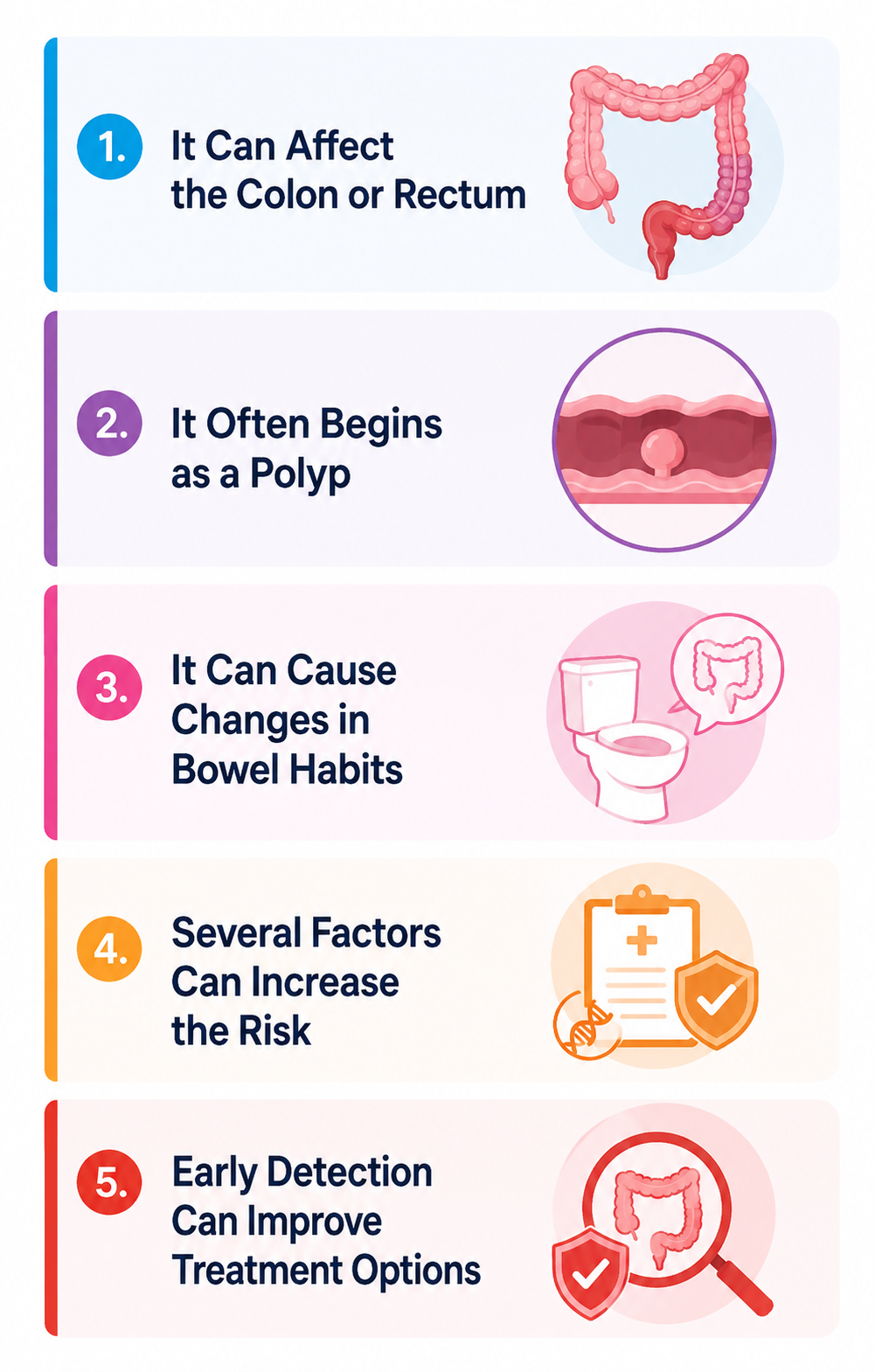
Colorectal cancer is a type of cancer that develops in the colon or rectum, which are parts of the large intestine and digestive system. It often begins as abnormal growths called polyps, some of which can gradually develop into cancer. Understanding its symptoms, risk factors, and progression can help with early detection and treatment.
- It Can Affect the Colon or Rectum: Colorectal cancer includes both colon cancer and rectal cancer. While they are closely related, their location and treatment approach can differ.
- It Often Begins as a Polyp: Many colorectal cancers begin as polyps that form on the inner lining of the colon or rectum. Some types of polyps can become cancerous over time, which is why screening and polyp removal can help prevent colorectal cancer.
- It Can Cause Changes in Bowel Habits: Symptoms may include persistent constipation or diarrhoea, changes in stool appearance, rectal bleeding, blood in the stool, abdominal discomfort, or a feeling that the bowel has not completely emptied.
- Several Factors Can Increase the Risk: Risk can increase with age, a family history of colorectal cancer, certain inherited conditions, inflammatory bowel disease, smoking, heavy alcohol use, obesity, physical inactivity, and certain dietary patterns.
- Early Detection Can Improve Treatment Options: Colorectal cancer can often be detected through screening before significant symptoms develop. Diagnosis may involve stool tests, colonoscopy, biopsy, and imaging.
Are There Different Types of Colorectal Cancer?
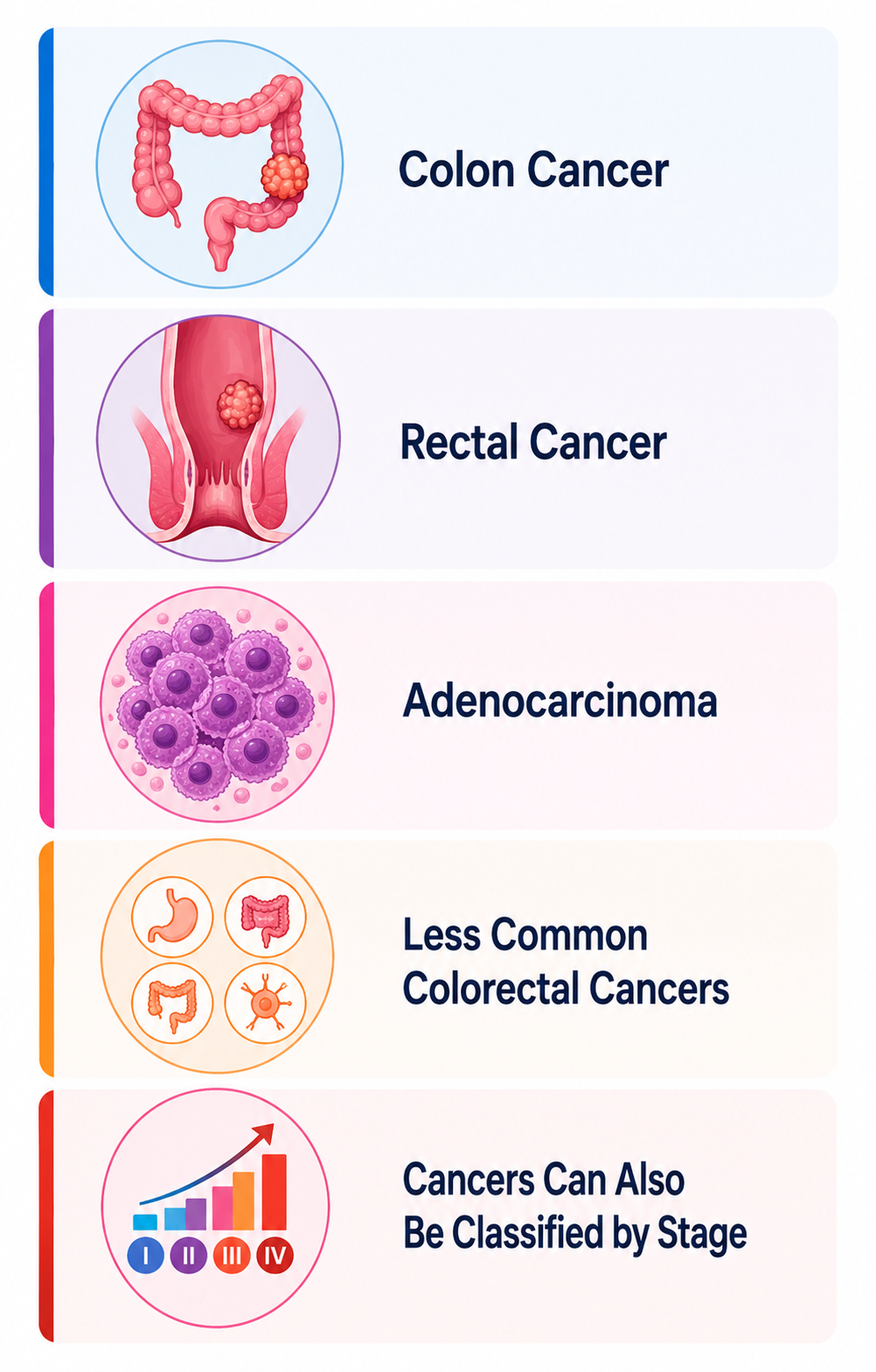
Yes, colorectal cancer can be classified in different ways based on where it develops and the type of cells involved. Most colorectal cancers are adenocarcinomas, but other less common types can also occur. Understanding these types helps doctors determine the appropriate treatment approach.
- Colon Cancer: Colon cancer develops in the colon, which is the main part of the large intestine. It can occur in different sections of the colon, and treatment depends on its location, stage, and other tumour characteristics.
- Rectal Cancer: Rectal cancer develops in the rectum, the final section of the large intestine. Although it is closely related to colon cancer, treatment may differ, with radiation therapy often playing an important role in the management of certain rectal cancers.
- Adenocarcinoma: Adenocarcinoma is the most common type of colorectal cancer. It develops from glandular cells lining the inside of the colon or rectum and accounts for the vast majority of colorectal cancers.
- Less Common Colorectal Cancers: Other, rarer cancers can develop in the colon or rectum, including neuroendocrine tumours, gastrointestinal stromal tumours (GISTs), lymphomas, and squamous cell carcinomas. Their treatment can differ from that of adenocarcinoma.
- Cancers Can Also Be Classified by Stage: Colorectal cancer is classified from Stage 0 to Stage IV based on how deeply it has grown and whether it has spread to lymph nodes or other parts of the body. The stage is an important factor in determining treatment.
How Is Colorectal Cancer in Bangalore Diagnosed?
Diagnostic Step | What It Involves |
Medical History & Physical Examination | The doctor reviews symptoms, bowel changes, family history, previous medical conditions, and other risk factors. A physical examination may also be performed. |
Stool-Based Tests | Stool tests may check for hidden blood or other signs that could indicate colorectal abnormalities. These tests can be useful for screening but cannot confirm cancer on their own. |
Colonoscopy | A colonoscopy allows the doctor to examine the entire colon and rectum using a flexible camera. If suspicious polyps or abnormal areas are found, they can often be removed or biopsied during the procedure. |
Bone Biopsy & Laboratory Testing | A tissue sample from a suspicious area is examined under a microscope to determine whether cancer cells are present. Additional tests may help identify characteristics of the tumour. |
Imaging & Staging Tests | CT scans, MRI, PET scans, or other imaging tests may be recommended to determine the size and location of the cancer and whether it has spread to nearby lymph nodes or other organs. |
Biomarker & Molecular Testing | Certain colorectal cancers may undergo molecular or biomarker testing to identify changes that can help doctors understand the tumour and determine whether targeted therapy or immunotherapy may be appropriate. |
Why Choose Healius For Colorectal Cancer Treatment in Bangalore?
Choosing the right cancer care centre is an important decision, especially when colorectal cancer may require a combination of treatments and specialist expertise. Healius focuses on personalised, coordinated cancer care, helping patients understand their diagnosis and treatment options at every stage.
1. Multidisciplinary Cancer Care
- Colorectal cancer may require the expertise of medical, surgical, and radiation oncologists depending on the stage and location of the cancer.
- Healius brings together different areas of oncology expertise to support coordinated treatment planning.
2. Personalised Treatment Plans
- Every colorectal cancer diagnosis is different, so treatment is planned according to the cancer’s stage, location, characteristics, and the patient’s overall health.
- Healius focuses on creating individualised treatment plans rather than following a one-size-fits-all approach.
3. Experienced Oncology Specialists
- Patients have access to oncology specialists with experience in managing colorectal and other solid cancers.
- Specialist-led evaluation helps determine appropriate treatment options based on the individual’s diagnosis.
4. Comprehensive Treatment Options
- Depending on the patient’s condition, colorectal cancer treatment may include surgery, chemotherapy, radiation therapy, targeted therapy, or immunotherapy.
- Healius provides access to different oncology treatment approaches, allowing care to be planned according to the patient’s specific needs.
5. Evidence-Based Cancer Care
- Treatment decisions are guided by clinical evaluation, diagnostic findings, and established oncology practices.
- This helps ensure that treatment recommendations are based on the patient’s individual cancer characteristics.
6. Patient-Centred Approach
- Cancer treatment can be physically and emotionally challenging, making clear communication and support an important part of care.
- Healius focuses on helping patients understand their diagnosis, treatment options, and next steps throughout their cancer journey.
What is the Cost of Colorectal Cancer in Bangalore?
The overall cost of colorectal cancer treatment in Bangalore can vary from patient to patient. There is no single fixed cost because the treatment plan is determined based on the type and stage of cancer, the patient’s health, and the treatments required. Some of the key factors that can affect the overall cost include:
- Stage of colorectal cancer: The stage of cancer and whether it has spread to nearby lymph nodes or other organs can influence the complexity and duration of treatment.
- Type of treatment: Costs can vary depending on whether the treatment involves surgery, chemotherapy, radiation therapy, targeted therapy, immunotherapy, or a combination of treatments.
- Complexity of surgery: If surgery is required, the type and complexity of the procedure, surgical approach, hospitalisation, and recovery requirements can affect the overall expense.
- Diagnostic and staging tests: Colonoscopy, biopsy, blood tests, CT or MRI scans, and molecular or biomarker testing may be required before and during treatment.
- Number of treatment cycles: Patients undergoing chemotherapy or other systemic treatments may require multiple cycles, depending on their individual treatment plan.
- Hospitalisation and supportive care: The duration of hospital stay, medications, management of treatment-related complications, and supportive care can also influence the overall cost.
Frequently Asked Questions
What are the common symptoms of colorectal cancer?
Common symptoms may include changes in bowel habits, blood in the stool, rectal bleeding, persistent abdominal discomfort, unexplained weight loss, fatigue, and a feeling that the bowel has not emptied completely.
Is colorectal cancer curable?
Colorectal cancer is generally classified from Stage 0 to Stage IV, based on how deeply the cancer has grown and whether it has spread to lymph nodes or other parts of the body.
When should I see a colorectal cancer specialist in Bangalore?
You should consider consulting a colorectal cancer treatment in Bangalore if you experience persistent bowel changes, blood in your stool, unexplained weight loss, ongoing abdominal symptoms, or have significant risk factors or a family history of colorectal cancer.
Where can I get colorectal cancer treatment in Bangalore?
Healius provides comprehensive cancer care in Bangalore, with treatment plans tailored to the patient’s diagnosis, cancer stage, and individual medical needs. Patients can consult oncology specialists to understand their diagnosis and available treatment options.
Who is at risk of developing colorectal cancer?
The risk increases with age and may be higher in people with a family history of colorectal cancer, inherited genetic conditions, inflammatory bowel disease, or certain lifestyle-related risk factors. Colorectal cancer can also occur in younger adults.
Is surgery always required for colorectal cancer?
Not necessarily, surgery is an important treatment for many localised colorectal cancers, but the treatment plan depends on the cancer’s stage, location, characteristics, and whether it has spread.
