
What is GI Surgery?
Living with ongoing digestive problems can be physically uncomfortable and emotionally draining. When symptoms such as severe abdominal pain, persistent digestive issues, unexplained bleeding, or digestive tract disorders begin affecting your daily life, GI surgery may offer an effective solution.
GI surgery, or gastrointestinal surgery, focuses on treating conditions that affect the digestive system. This includes organs such as the esophagus, stomach, intestines, colon, rectum, and gallbladder. The goal is to address the root cause of the problem, relieve symptoms, and help patients regain their health and quality of life.
Advances in surgical techniques now allow many procedures to be performed through minimally invasive methods, resulting in less pain, smaller scars, and faster recovery. Throughout the treatment journey, patients are guided by experienced specialists who focus on safety, comfort, and long-term outcomes.
When Do You Need Gastrointestinal Surgery?
GI surgery may be recommended when a digestive condition causes persistent symptoms, affects your quality of life, or poses a risk of serious complications. Some of the most common reasons include:
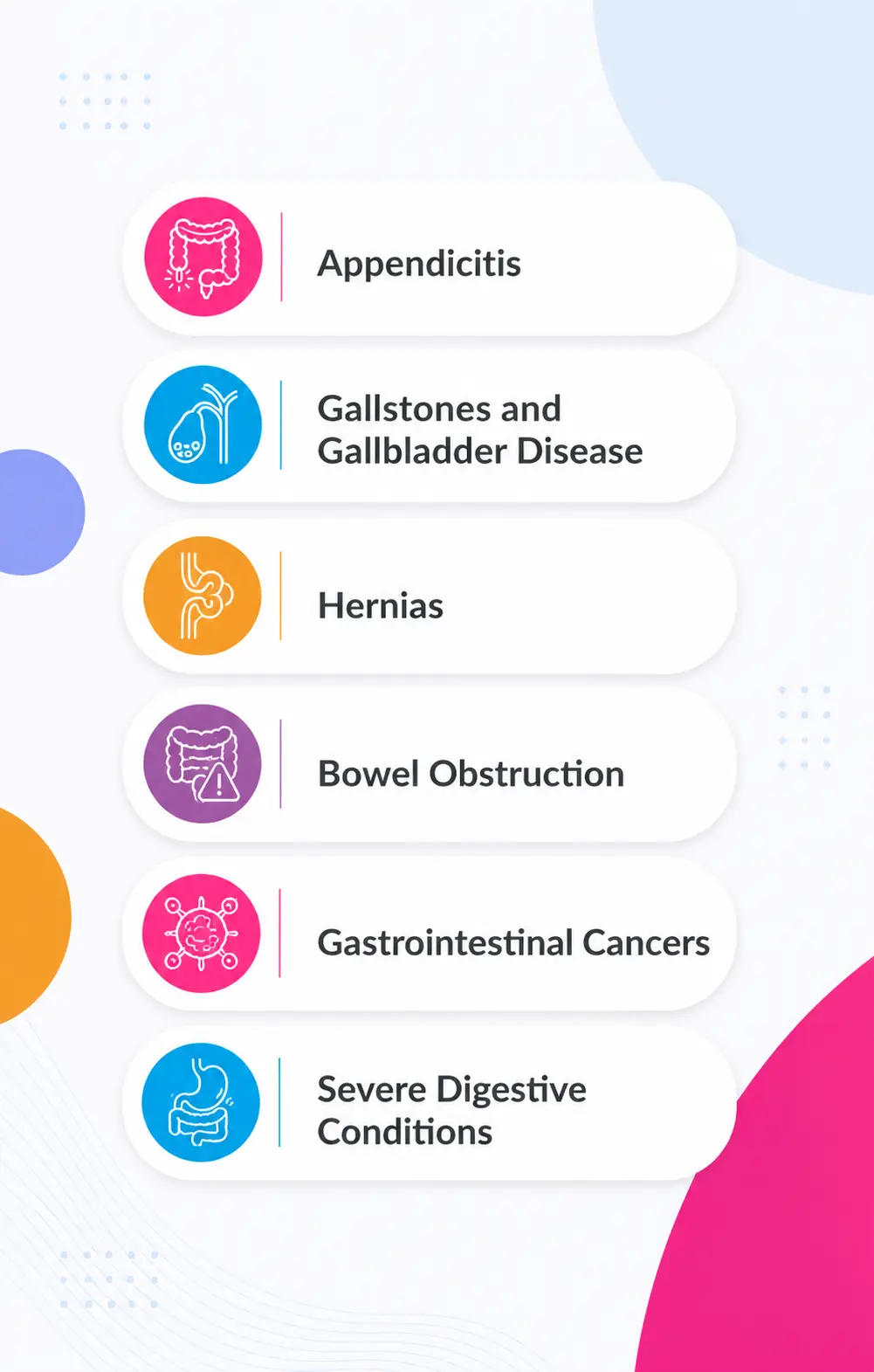
Appendicitis – An inflamed appendix often requires immediate surgery to prevent rupture and infection.
Gallstones and Gallbladder Disease – Surgery may be needed when gallstones cause severe pain, inflammation, or recurrent digestive issues.
Hernias – Hernias that are painful, growing in size, or at risk of becoming trapped usually require surgical repair.
Bowel Obstruction – A blockage in the intestine can prevent the normal passage of food and waste, often requiring urgent treatment.
Gastrointestinal Cancers – Surgery plays a key role in treating cancers of the esophagus, stomach, colon, rectum, and other parts of the digestive tract.
Severe Digestive Conditions – Conditions such as Crohn’s disease, ulcerative colitis, severe GERD, or recurrent diverticulitis may require surgery when other treatments no longer provide relief.
What Conditions Can Be Treated with GI Surgery?
GI surgery can help diagnose, manage, and treat a wide range of conditions affecting the digestive system. Depending on the severity of the condition and the patient’s overall health, surgery may be recommended to relieve symptoms, prevent complications, or improve digestive function.
Appendicitis: An inflamed appendix can cause severe abdominal pain and requires prompt surgical removal to prevent rupture and infection.
Gallstones and Gallbladder Disorders: Surgery is often recommended for gallstones, gallbladder inflammation, or recurrent gallbladder attacks that affect digestion and quality of life.
Hernias: Inguinal, umbilical, incisional, and hiatal hernias can be repaired through GI surgery to prevent pain and complications.
Gastrointestinal Cancers: Surgery plays a vital role in the treatment of cancers affecting the esophagus, stomach, colon, rectum, pancreas, and other digestive organs.
Bowel Obstruction: Partial or complete blockage of the intestines may require surgery to restore the normal movement of food and waste.
Inflammatory and Colorectal Disorders: Conditions such as Crohn’s disease, ulcerative colitis, diverticulitis, and large colorectal polyps that may require surgical intervention when symptoms become severe or recurrent.
Advanced Treatment Options for GI Cancers
Understanding what happens at each stage of your GI surgery journey can help you feel more prepared and confident about your treatment.
Small Bowel Tumours and GIST
- Small Bowel Cancer Treatment: Small bowel cancer treatment depends on the type, location and stage of the tumour. Surgery may be recommended when the tumour can be removed, while chemotherapy, targeted therapy or other treatments may be considered depending on the individual diagnosis.
- Small Intestinal Cancer Surgery: Small intestinal cancer surgery involves removing the tumour along with a margin of surrounding healthy tissue. Depending on the location and extent of the tumour, a section of the small intestine may be removed and the remaining sections reconnected.
- Gastrointestinal Stromal Tumour (GIST): Gastrointestinal stromal tumours (GISTs) are uncommon tumours that can develop in the digestive tract, particularly the stomach and small intestine. Surgery may be recommended for localised GISTs, while the treatment approach for advanced tumours depends on their size, location, molecular characteristics and spread.
- Imatinib for GIST Treatment: Imatinib is a targeted therapy used to treat certain GISTs, particularly those with specific KIT or PDGFRA mutations. It may be used before surgery in selected cases, after surgery when there is a higher risk of recurrence, or to manage advanced GISTs that cannot be completely removed through surgery.
Other GI and Hepatobiliary Tumours
- Cholangiocarcinoma Immunotherapy: Cholangiocarcinoma, or bile duct cancer, may require a combination of surgery and systemic treatments depending on the stage and whether the tumour can be surgically removed. For certain patients with advanced or unresectable disease, immunotherapy may be used alongside chemotherapy as part of a multidisciplinary treatment plan.
- Carcinoid Tumour Treatment: Carcinoid tumours are a type of neuroendocrine tumour that can develop in different parts of the gastrointestinal tract. Treatment depends on the tumour’s location, size, grade and stage and may include surgery, medicines, targeted therapies or other treatments.
- Carcinoid Tumour Hormonal Therapy: Some carcinoid tumours produce hormones that can cause symptoms such as flushing and diarrhoea. Hormonal treatment with medicines such as somatostatin analogues may help control these symptoms and, in some cases, slow the growth of the tumour.
Why Is Healius The Best Choice For GI Surgery in Bangalore?
| What Sets Healius Apart | How It Benefits Patients |
| Experienced GI Surgeons & Multidisciplinary Specialists | Patients benefit from the expertise of skilled GI surgeons working closely with gastroenterologists, oncologists, radiologists, and other specialists for comprehensive care. |
| Advanced Minimally Invasive & Laparoscopic Surgery | Smaller incisions, reduced pain, faster recovery, shorter hospital stays, and minimal scarring whenever clinically appropriate. |
| Comprehensive GI Care Under One Roof | From consultation and diagnostics to surgery, cancer care, recovery, and follow-up support, patients receive seamless treatment at a single center. |
| Expertise in Complex GI & GI Cancer Surgeries | Experienced in managing a wide range of conditions, including gastrointestinal cancers, bowel disorders, hernias, gallbladder diseases, and other complex digestive conditions. |
| Advanced Diagnostic & Surgical Technology | Access to modern imaging, endoscopy, and surgical technologies that support accurate diagnosis, precise treatment planning, and improved outcomes. |
| Personalized Treatment Plans | Every treatment plan is tailored to the patient’s condition, medical history, lifestyle, and recovery goals rather than following a one-size-fits-all approach. |
| Focus on Faster Recovery & Better Outcomes | Enhanced recovery protocols, comprehensive post-operative care, and continuous monitoring help patients return to their daily lives sooner. |
| Patient-Centric Care & Ongoing Support | Dedicated support throughout the treatment journey, including pre-surgical counseling, recovery guidance, nutrition advice, and follow-up care. |
What to Expect Before, During, and After GI Surgery?
Understanding what happens at each stage of your GI surgery journey can help you feel more prepared and confident about your treatment.
Before GI Surgery
Before the procedure, your surgical team will conduct a thorough evaluation to understand your condition and plan the most suitable treatment approach.
- Detailed Consultation & Assessment: Your surgeon will review your symptoms, medical history, and treatment goals.
- Diagnostic Tests: Blood tests, imaging scans, endoscopy, or other investigations may be performed to confirm the diagnosis.
- Pre-Surgical Preparation: You may be advised to adjust certain medications, follow dietary restrictions, or fast before surgery.
- Anesthesia Evaluation: An anesthesiologist will assess your health and determine the safest anesthesia plan.
- Treatment Planning & Counseling: The surgical team will explain the procedure, expected outcomes, potential risks, and recovery process.
During GI Surgery
The procedure is performed in a controlled surgical environment with continuous monitoring to ensure patient safety.
- Administration of Anesthesia: You will receive anesthesia to ensure comfort throughout the procedure.
- Advanced Surgical Techniques: Depending on your condition, the surgery may be performed using minimally invasive or open surgical methods.
- Continuous Monitoring: Your vital signs are closely monitored by the surgical and anesthesia teams throughout the procedure.
- Precision-Focused Treatment: The surgeon treats the affected area while preserving as much healthy tissue as possible.
- Safety-Driven Care: Strict surgical protocols are followed to support the best possible outcomes.
After GI Surgery
Recovery begins immediately after surgery, with a focus on healing, comfort, and returning to normal activities safely.
- Post-Operative Monitoring: Your recovery is closely monitored to ensure stable healing and early detection of any concerns.
- Pain & Symptom Management: Medications and supportive care help keep you comfortable during recovery.
- Gradual Return to Eating: Your care team will guide you on when and how to resume food and fluids.
- Recovery & Rehabilitation Guidance: Instructions on activity levels, wound care, and lifestyle modifications are provided.
- Follow-Up Care: Regular follow-up visits help track recovery progress and ensure the best long-term outcomes.
What Are The Options Available Under GI Surgery Treatments?
Depending on the condition being treated, GI surgeons may recommend different surgical approaches to restore digestive health and prevent complications. Some of the most commonly performed GI surgery treatments include:
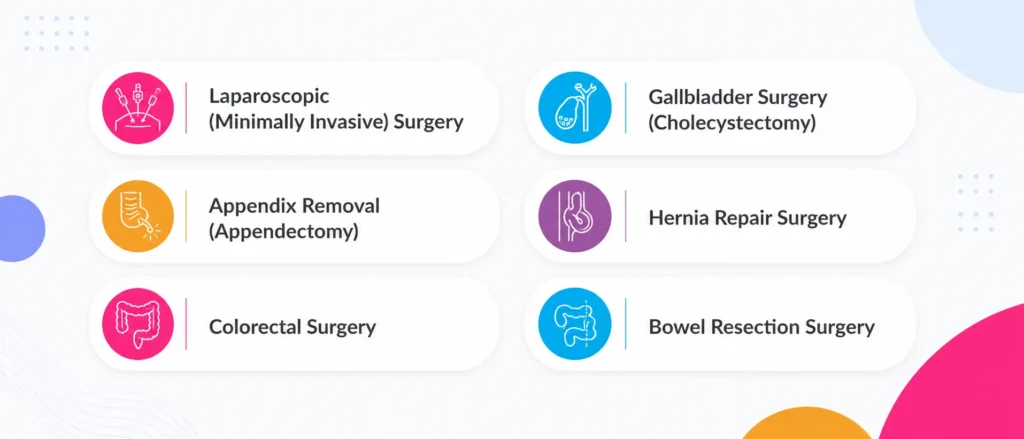
Laparoscopic (Minimally Invasive) Surgery
Performed through small incisions using specialized instruments and a camera, offering faster recovery, less pain, and minimal scarring.
Gallbladder Surgery (Cholecystectomy)
A procedure to remove the gallbladder, commonly recommended for gallstones, gallbladder inflammation, and recurrent gallbladder attacks.
Appendix Removal (Appendectomy)
Surgical removal of an inflamed or infected appendix to prevent rupture and serious complications.
Hernia Repair Surgery
Used to repair weakened areas in the abdominal wall and treat inguinal, umbilical, incisional, and hiatal hernias.
Colorectal Surgery
Procedures performed to treat conditions affecting the colon, rectum, and anus, including colorectal cancer, diverticulitis, inflammatory bowel disease, and large polyps.
Bowel Resection Surgery
Removal of a diseased or damaged section of the intestine, often performed for bowel obstruction, intestinal tumors, Crohn’s disease, or colorectal cancer.
Frequently Asked Questions
How long does it take to recover from GI surgery?
Recovery time varies depending on the procedure and the patient’s overall health. Minimally invasive surgeries typically have shorter recovery periods than complex open surgeries.
Is GI surgery painful?
Patients are given anesthesia during the procedure and appropriate pain management after surgery. Most discomfort can be effectively managed with medications and post-operative care.
What are the benefits of choosing a specialized GI surgery center in Bangalore?
By choosing a specialized hospital for GI surgery like Healius, patients benefit from experienced GI surgeons, advanced laparoscopic techniques, coordinated multidisciplinary care, and expertise in treating both routine and complex digestive disorders.
What are the symptoms of bowel obstruction?
Common symptoms include severe abdominal pain, bloating, vomiting, constipation, inability to pass gas, and abdominal swelling. Immediate medical attention may be required.
Can gallstones be treated without a gastrointestinal surgery?
Some gallstones may not require treatment if they do not cause symptoms. However, recurrent pain, infection, or gallbladder complications often require surgical removal of the gallbladder.
Will I need dietary changes after GI surgery?
Depending on the procedure, your doctor may recommend temporary or long-term dietary modifications to support healing and digestive health.
When can I resume exercise after gastrointestinal surgery?
Light activities such as walking are often encouraged soon after surgery, while strenuous exercise and heavy lifting may need to be avoided for several weeks based on your surgeon’s advice.
What are the options for Small Bowel Cancer Treatment in Bangalore?
Small bowel cancer treatment depends on the type, location and stage of the tumour. Surgery may be recommended to remove the cancer, while chemotherapy, targeted therapy or other treatments may be considered based on the individual diagnosis.
When is surgery recommended for small intestinal cancer?
Small intestinal cancer surgery in Bangalore may be recommended when the tumour can be safely removed. The procedure may involve removing the affected section of the small intestine along with nearby healthy tissue and reconnecting the remaining bowel.
