
What is Oral Cancer?
Most of us experience mouth ulcers, gum irritation, or occasional discomfort in the mouth and rarely think much of it. However, when certain symptoms persist for weeks or keep returning, they may require closer attention. Oral cancer is a condition that develops when abnormal cells grow in the tissues of the mouth or surrounding areas and begin to spread if left untreated.
This type of cancer can occur on the tongue, lips, gums, cheeks, floor of the mouth, or the roof of the mouth. Although it is often associated with smoking and tobacco use, oral cancer can also affect people who do not use tobacco products. Factors such as alcohol consumption, HPV infection, and prolonged sun exposure can also contribute to the risk.
The good news is that oral cancer is often detectable in its early stages. Persistent sores, unexplained lumps, difficulty chewing or swallowing, and unusual patches inside the mouth are some signs that should never be ignored.
What Are The Symptoms of Oral Cancer?
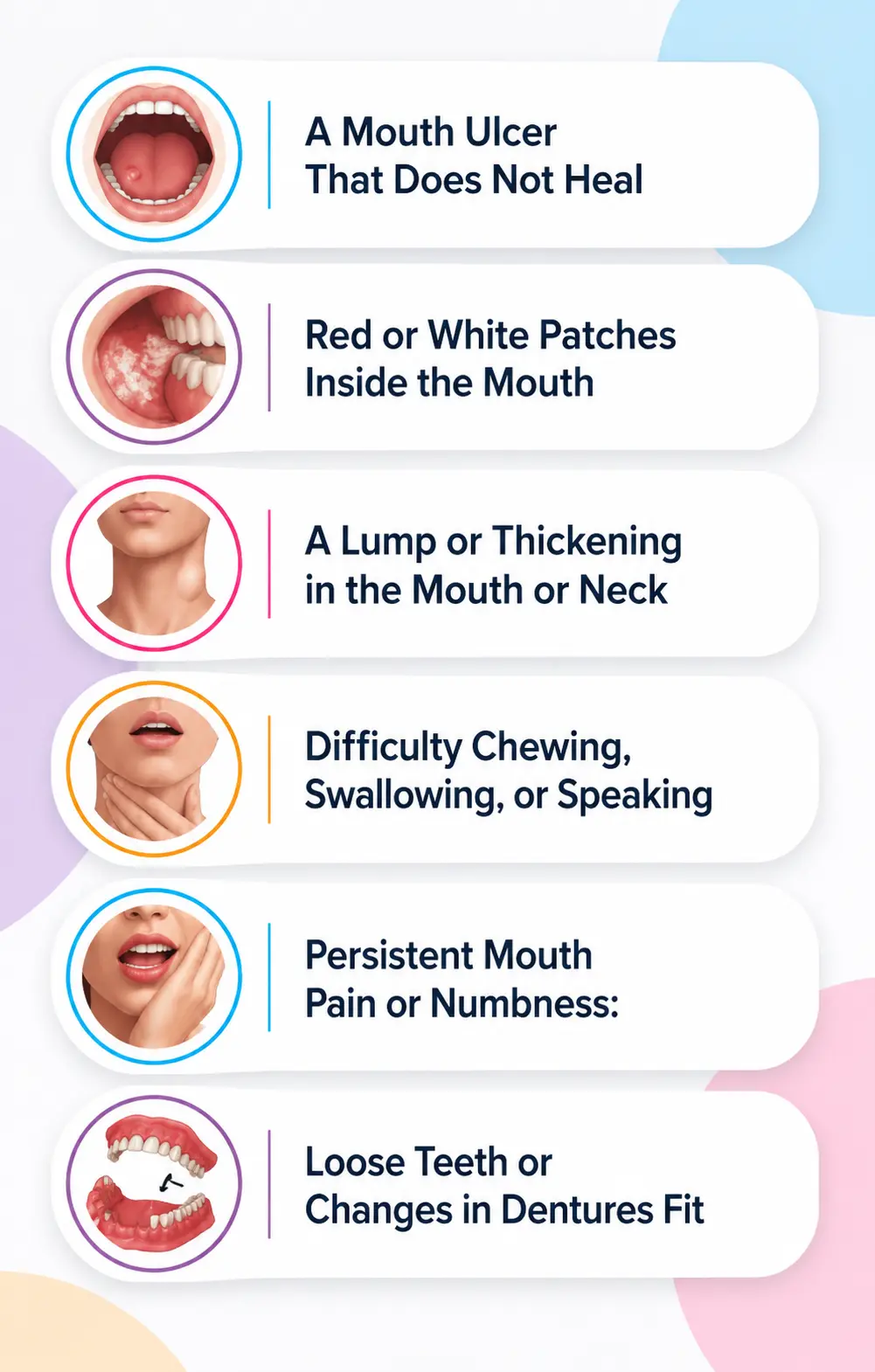
The symptoms of oral cancer can vary from person to person, but some warning signs should never be ignored, especially if they persist for more than two weeks. The six most important symptoms of oral cancer include:
A Mouth Ulcer That Does Not Heal: A persistent sore or ulcer in the mouth that does not heal within two weeks is one of the most common signs of oral cancer.
Red or White Patches Inside the Mouth: Unusual red, white, or mixed red-and-white patches on the tongue, gums, cheeks, or roof of the mouth may indicate abnormal cell changes.
A Lump or Thickening in the Mouth or Neck: A painless lump, swelling, or thickened area inside the mouth, jaw, or neck should be evaluated by a healthcare professional.
Difficulty Chewing, Swallowing, or Speaking: Oral cancer can affect normal mouth functions, making it uncomfortable or difficult to chew food, swallow, or speak clearly.
Persistent Mouth Pain or Numbness: Ongoing pain, tenderness, or numbness in the mouth, lips, tongue, or jaw that does not improve may be a warning sign.
Loose Teeth or Changes in Dentures Fit: Teeth becoming loose without a dental cause or dentures suddenly fitting poorly can sometimes be linked to oral cancer affecting the underlying tissues.
What Are The Causes Of Oral Cancer?
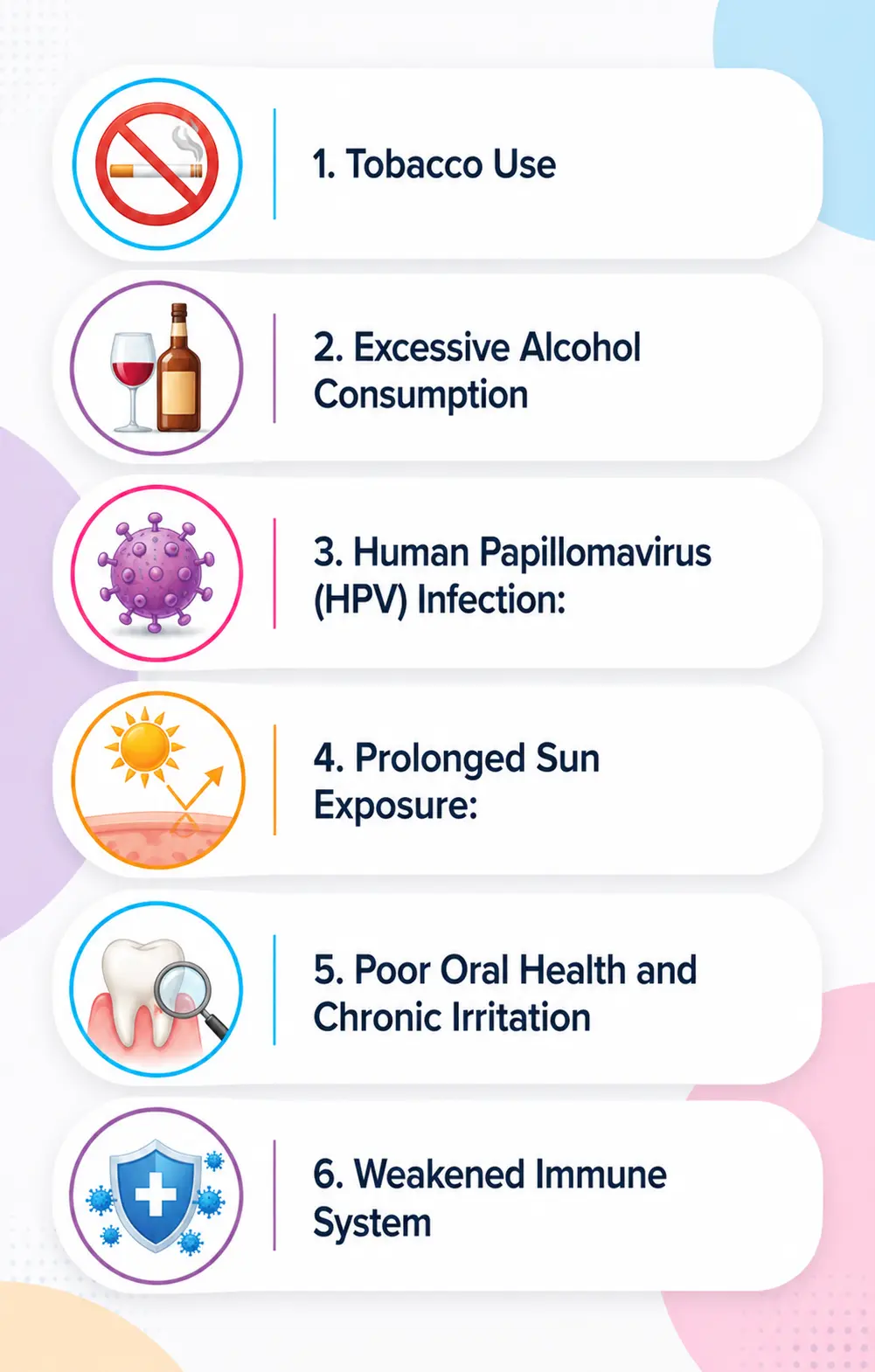
Oral cancer develops when cells in the mouth undergo abnormal genetic changes that cause them to grow and divide uncontrollably. While the exact cause may not always be identified, several factors are known to increase the risk of developing oral cancer.
- Tobacco Use: Smoking cigarettes, cigars, pipes, or using smokeless tobacco products such as chewing tobacco and gutka is one of the leading causes of oral cancer. Harmful chemicals in tobacco can damage the cells lining the mouth and throat.
- Excessive Alcohol Consumption: Heavy and long-term alcohol use can irritate the tissues of the mouth, increasing the risk of cancer. The risk is significantly higher when alcohol consumption is combined with tobacco use.
- Human Papillomavirus (HPV) Infection: Certain strains of HPV, particularly HPV-16, have been linked to cancers of the mouth and throat. HPV-related oral cancers are becoming increasingly common worldwide.
- Prolonged Sun Exposure: Extended exposure to ultraviolet (UV) rays from the sun can increase the risk of lip cancer, especially on the lower lip.
- Poor Oral Health and Chronic Irritation: Untreated dental issues, poor oral hygiene, sharp teeth, or ill-fitting dentures may contribute to long-term irritation of oral tissues, which can increase cancer risk.
- Weakened Immune System: Individuals with a weakened immune system may be more susceptible to developing oral cancer due to a reduced ability to fight abnormal cell growth.
How Is Oral Cancer Treated?
| Step | What Happens? |
| Step 1: Diagnosis & Staging | The doctor confirms oral cancer through a physical examination, imaging tests, and a biopsy. The stage of the cancer is determined to guide treatment planning. |
| Step 2: Multidisciplinary Evaluation | A team of specialists reviews the diagnosis and develops a personalized treatment plan based on the patient’s condition and cancer stage. |
| Step 3: Surgical Removal of the Tumor | Surgery is performed to remove the cancerous growth along with a margin of healthy tissue to reduce the risk of recurrence. |
| Step 4: Lymph Node Assessment & Management | Nearby lymph nodes may be removed and examined if there is a possibility that the cancer has spread beyond the primary site. |
| Step 5: Radiation Therapy | Radiation is used to destroy remaining cancer cells after surgery or as a primary treatment in selected cases. |
| Step 6: Chemotherapy or Targeted Therapy | Additional treatments such as chemotherapy or targeted therapy may be recommended for advanced or high-risk oral cancers. |
| Step 7: Recovery, Rehabilitation & Follow-Up | Ongoing monitoring, rehabilitation support, and regular follow-ups help detect recurrence early and support patients beyond active treatment. |
What All Comes Under Oral Cancer Treatment?
1. Medical History and Physical Examination
- The doctor will ask about symptoms, how long they have been present, and any relevant medical history.
- They may examine the mouth, throat, nose, neck, and other areas for unusual changes.
- The neck may be checked for lumps or swollen lymph nodes.
- Tobacco, alcohol, HPV-related risk factors, and previous health conditions may also be discussed.
2. Endoscopy
- A thin, flexible or rigid instrument may be used to examine areas that are difficult to see during a routine examination.
- It can help the doctor closely examine the nose, throat, larynx, or other affected areas.
- In some cases, a special scope may be used to examine the upper digestive or respiratory tract.
- Any suspicious areas identified during the examination may require further testing.
3. Imaging Tests
- Imaging helps doctors understand the size and location of a suspected tumour.
- CT or MRI scans may be used to examine the head and neck in greater detail.
- PET scans may be recommended in certain situations to assess whether cancer has spread.
- Imaging findings also help doctors plan further investigations and treatment.
4. Biopsy
- Uses high-energy radiation beams to destroy cancer cells.
- Commonly recommended after surgery to eliminate any remaining cancer cells.
- Can also be used as a primary treatment in selected cases.
5. Chemotherapy
- Uses anti-cancer drugs to kill or slow the growth of cancer cells.
- Often combined with radiation therapy for advanced-stage oral cancers.
- May be given before or after surgery depending on the treatment plan.
6. Targeted Therapy
- Targets specific proteins or pathways that help cancer cells grow.
- Designed to attack cancer cells while minimizing damage to healthy tissues.
- Often used for advanced or recurrent oral cancers.
7. Immunotherapy
- Helps the body’s immune system recognize and fight cancer cells more effectively.
- May be recommended for certain advanced oral cancers.
- Can improve treatment outcomes in selected patients when other therapies are not sufficient.
Why Choose Healius For Your Oral Cancer Treatment in Bangalore?
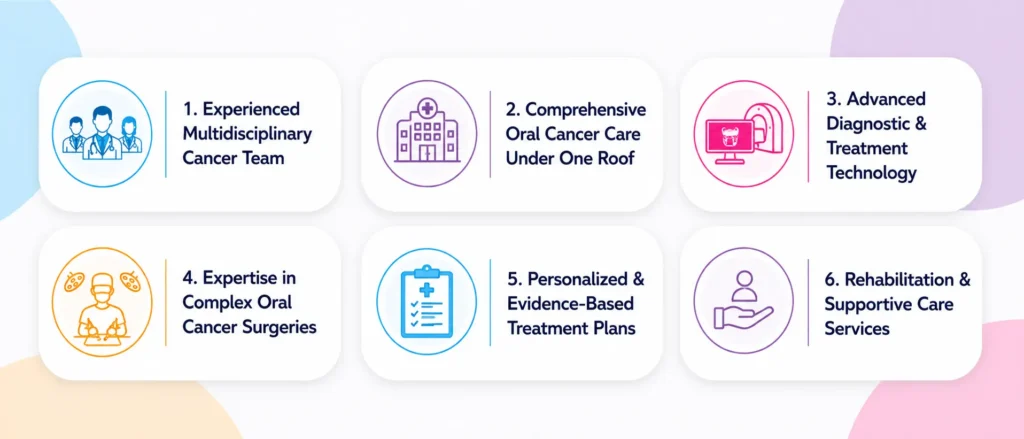
1. Experienced Multidisciplinary Cancer Team
Our team of surgical, medical, and radiation oncologists work together to create personalized treatment plans tailored to each patient’s diagnosis, stage of cancer, and overall health.
2. Comprehensive Oral Cancer Care Under One Roof
From diagnosis and staging to surgery, chemotherapy, radiation therapy, and rehabilitation, Healius offers end-to-end oral cancer treatment through a coordinated and patient-focused approach.
3. Advanced Diagnostic & Treatment Technology
We leverage modern diagnostic tools and advanced treatment technologies to ensure accurate detection, precise treatment planning, and improved clinical outcomes.
4. Expertise in Complex Oral Cancer Surgeries
Our specialists are experienced in performing a wide range of oral cancer procedures, including tumor removal, lymph node management, and reconstructive surgeries when required.
5. Personalized & Evidence-Based Treatment Plans
Every treatment strategy is designed around the patient’s unique needs, ensuring the most effective combination of therapies while prioritizing quality of life.
6. Rehabilitation & Supportive Care Services
We provide comprehensive post-treatment support, including nutritional guidance, speech and swallowing rehabilitation, and recovery-focused care to help patients regain confidence and function.
7. Focus on Long-Term Recovery & Follow-Up
Our commitment extends beyond treatment with structured follow-up care, regular monitoring, and survivorship support to help patients maintain their health and well-being.
What Is Oral Cancer Treatment Cost?
Factor | How It Affects Treatment Cost |
Stage of Cancer | Early-stage oral cancers may require less extensive treatment, while advanced cancers often need a combination of therapies and longer treatment durations. |
Type of Treatment Required | The overall treatment plan may include surgery, radiation therapy, chemotherapy, targeted therapy, immunotherapy, or a combination of these approaches. |
Complexity of Surgery | Larger tumors or cancers involving surrounding structures may require more extensive surgical procedures and specialized care. |
Need for Reconstructive Surgery | Some patients may require reconstructive procedures to restore appearance and oral functions after tumor removal. |
Chemotherapy, Targeted Therapy, or Immunotherapy | The type, frequency, and duration of drug-based treatments vary based on the patient’s condition and treatment goals. |
Radiation Therapy Requirements | The number of radiation sessions and the technology used can influence the overall treatment plan and associated expenses. |
Hospital Stay & Post-Treatment Care | Length of hospitalization, rehabilitation services, nutritional support, and follow-up care can impact the overall treatment journey. |
Frequently Asked Questions
Can oral cancer be cured if detected early?
Yes, when diagnosed in its early stages, oral cancer is highly treatable and often has better treatment outcomes. Early detection can help reduce the extent of treatment required and improve recovery rates.z
How long does oral cancer treatment take?
The duration of treatment varies depending on the stage of cancer and the treatment plan. Some patients may complete treatment within a few weeks, while others may require several months of combined therapies and follow-up care.
Can oral cancer spread to other parts of the body?
If left untreated, oral cancer can spread to nearby lymph nodes and other parts of the body. Early diagnosis and timely treatment are important to prevent cancer progression.
What is the recovery time after oral cancer treatment?
Recovery varies depending on the treatment received. Patients who undergo surgery, radiation, or chemotherapy may require additional time for healing, rehabilitation, and follow-up care before returning to normal activities.
Where can I get oral cancer treatment in Bangalore?
Healius offers comprehensive oral cancer care through a multidisciplinary team of specialists, advanced diagnostic technology, personalized treatment plans, and access to surgery, radiation therapy, chemotherapy, and rehabilitation services under one roof.
Can non-smokers get oral cancer?
Yes, while tobacco use is a major risk factor, oral cancer can also occur in non-smokers due to factors such as HPV infection, alcohol consumption, genetic predisposition, and other lifestyle or environmental influences.
