
What is Radiation Oncology?
Radiation oncology focuses on using radiation as a precise tool in cancer treatment. The goal is to deliver radiation to cancer cells while limiting its effect on surrounding healthy tissue. Depending on the cancer, radiation therapy may shrink a tumour, destroy remaining cancer cells after surgery, prevent cancer from returning, or control symptoms including cancer-related pain.
Your radiation oncologist in Bangalore ensures planning and overseeing treatment. They assess reports and scans, determine whether radiation is appropriate, decide how it should be delivered, and monitor the patient’s response and side effects.
If you are exploring radiation oncology in Bangalore, it is helpful to choose a centre where radiation treatment is considered alongside other cancer therapies. At Healius, radiation oncology forms part of an approach, supporting personalised care based on the cancer type, stage, and goals. Our expert team led by the best radiation oncologist in Bangalore can guide patients through consultation, planning, treatment, and follow-up.
What Conditions Does Radiation Oncology in Bangalore Treat?
Radiation oncology can be used to treat a wide range of cancers, either as the primary treatment or alongside surgery and other cancer therapies. The approach depends on the cancer type, stage, location, and the patient’s overall treatment plan.
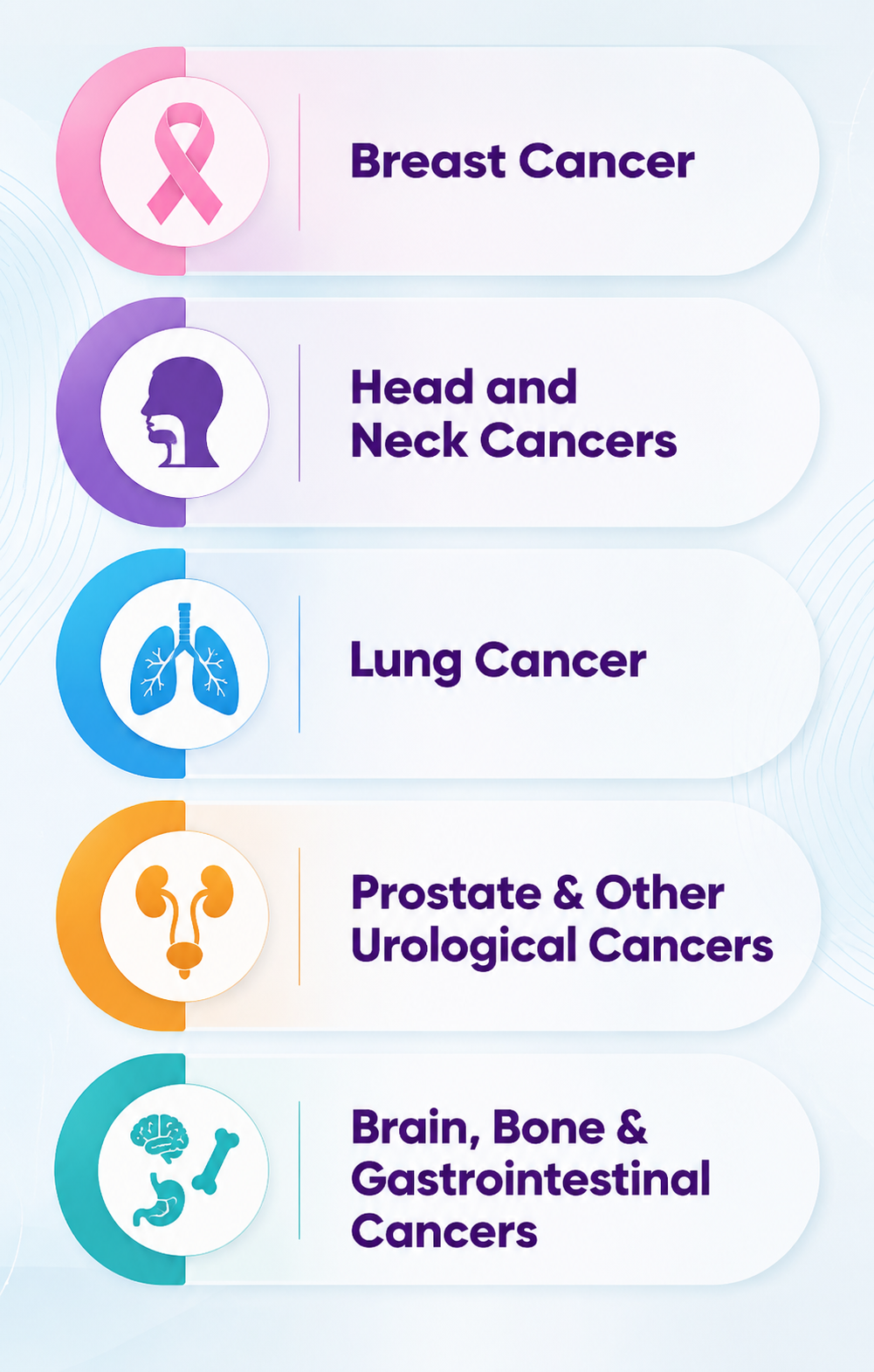
- Breast Cancer: Radiation therapy may be recommended after breast-conserving surgery or in certain cases after a mastectomy to target any cancer cells that may remain in the treatment area.
- Head and Neck Cancers: Radiation oncology plays an important role in treating cancers of the mouth, throat, larynx, and other areas of the head and neck, either alone or with other treatments.
- Lung Cancer: Radiation therapy can be used to treat certain lung cancers, particularly when surgery may not be suitable, or to target specific tumour areas as part of combined cancer care.
- Prostate & Other Urological Cancers: Radiation may be used to treat prostate cancer and certain other cancers affecting the urinary system, depending on the stage and characteristics of the disease.
- Brain, Bone & Gastrointestinal Cancers: Radiation therapy can help treat selected brain tumours, bone tumours, and cancers of the stomach, rectum, pancreas, and other gastrointestinal organs. It may also help relieve symptoms caused by advanced cancer.
What Are The Different Types of Treatments Under Radiation Oncology in Bangalore?
Radiation oncology offers several treatment approaches depending on the type, stage, size, and location of cancer. A radiation oncologist in Bangalore evaluates these factors to recommend the most suitable technique, either as a standalone treatment or alongside surgery and chemotherapy. Some of the key treatments available under radiation oncology in Bangalore include:
1. External Beam Radiation Therapy
External beam radiation therapy uses a specialised machine to deliver focused radiation to the tumour from outside the body. Techniques such as 3D conformal radiation therapy (3D-CRT), IMRT, and IGRT help target cancer cells while limiting radiation exposure to nearby healthy tissues.
2. Stereotactic Radiosurgery and Radiotherapy
Stereotactic techniques deliver highly precise, concentrated doses of radiation to a tumour in fewer treatment sessions. They may be used for certain brain, spine, lung, liver, and other localised tumours, depending on the patient’s condition.
3. Brachytherapy
Brachytherapy is a form of internal radiation therapy in which a radioactive source is placed inside or close to the tumour. It is commonly used for cancers such as cervical, endometrial, prostate, and some breast cancers, depending on the treatment plan.
4. Intensity-Modulated Radiation Therapy (IMRT)
IMRT is an advanced form of external radiation therapy that adjusts the intensity of radiation beams to conform more closely to the shape of the tumour. This can help deliver an effective dose to the cancer while reducing radiation exposure to surrounding organs.
5. Image-Guided Radiation Therapy (IGRT)
IGRT uses imaging during the course of treatment to help accurately locate the tumour and account for changes in its position. This allows radiation oncologists to make precise adjustments and deliver radiation more accurately.
6. Volumetric Modulated Arc Therapy (VMAT)
VMAT delivers radiation while the treatment machine rotates around the patient. The radiation intensity and beam shape can be continuously adjusted, allowing complex treatment plans to be delivered efficiently and precisely.
How Does A Radiation Oncologist Diagnose Your Condition?
A radiation oncologist plays an important role in evaluating whether radiation therapy is appropriate for your cancer and, if so, how it should be planned. While cancer diagnosis may involve several specialists, a radiation oncologist reviews your medical history, test results, and tumour characteristics before recommending a treatment approach.
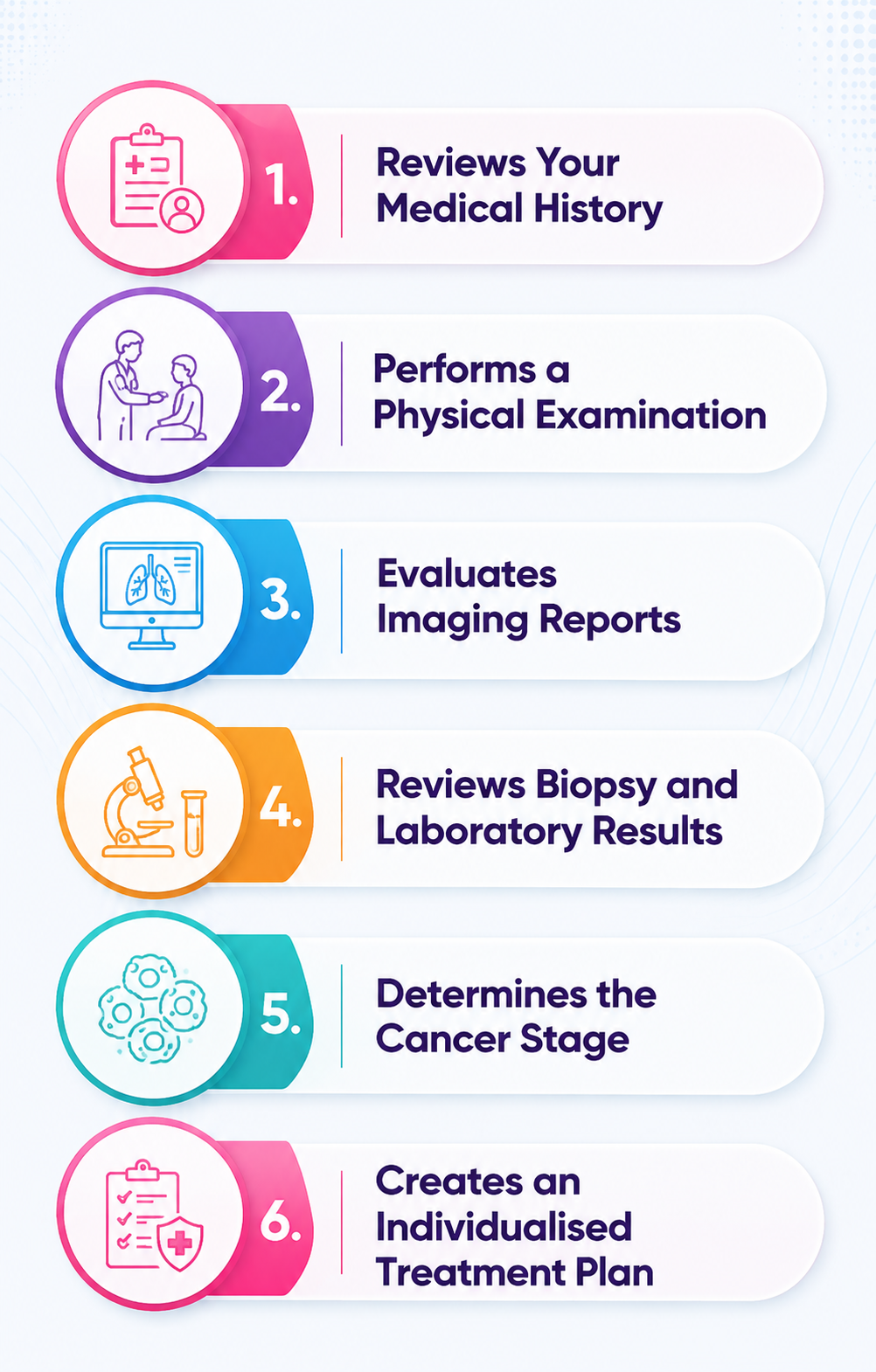
- Reviews Your Medical History: The radiation oncologist begins by understanding your symptoms, previous diagnoses, medical history, medications, and any cancer treatments you may have already undergone. This helps provide context for your current condition.
- Performs a Physical Examination: Depending on the type and location of cancer, a physical examination may be performed to assess symptoms, swelling, lumps, pain, or other relevant changes. The findings help determine whether further investigations are required.
- Evaluates Imaging Reports: Scans such as CT, MRI, PET-CT, or ultrasound may be reviewed to understand the tumour’s size, location, and extent. These images also help the radiation oncologist determine which surrounding organs and tissues need to be protected during treatment.
- Reviews Biopsy and Laboratory Results: If a biopsy has been performed, the pathology report helps confirm the type and characteristics of cancer. Blood tests and other laboratory investigations may also be reviewed to assess your overall health and readiness for treatment.
- Determines the Cancer Stage: The radiation oncologist considers the available test results to understand the stage and spread of the cancer. Staging is important because it influences whether radiation is recommended alone or as part of a combination with surgery, chemotherapy, immunotherapy, or other treatments.
- Creates an Individualised Treatment Plan: After reviewing all the information, the radiation oncologist determines whether radiation therapy is suitable and selects the appropriate technique and treatment area. If radiation is recommended, detailed planning scans may be performed to map the tumour and surrounding healthy tissues before treatment begins.
What is The Cost of Radiation Oncology in Bangalore?
Factor | How It Can Affect the Cost |
Type and Stage of Cancer | The type, location, and stage of cancer can determine the complexity and duration of radiation treatment. |
Type of Radiation Therapy | Techniques such as IMRT, IGRT, VMAT, SBRT, or brachytherapy may have different costs based on the technology and treatment requirements. |
Number of Treatment Sessions | The total number of radiation sessions required can significantly influence the overall treatment expense. |
Treatment Planning and Imaging | Scans, CT simulation, treatment planning, and other assessments required before radiation therapy can add to the cost. |
Hospital and Treatment Facilities | The infrastructure, radiation equipment, specialist expertise, and supportive cancer-care services available at the centre can influence the overall cost. |
Additional Cancer Treatments | If radiation is combined with chemotherapy, surgery, targeted therapy, or other treatments, the total cost of cancer care may increase. |
Follow-Up and Supportive Care | Follow-up consultations, monitoring, and management of treatment-related side effects may also contribute to the overall expense. |
Frequently Asked Questions
How do I find the best radiation oncologist in Bangalore?
When looking for the best radiation oncologist in Bangalore, consider the doctor’s experience, cancer specialisation, treatment techniques available, multidisciplinary care, and the quality of treatment planning and follow-up support.
What is the difference between radiation oncology and radiation therapy?
Radiation oncology is the medical specialty focused on treating cancer with radiation, while radiation therapy is the treatment used to deliver radiation to cancer cells. A radiation oncologist plans and oversees the treatment.
How can I find a radiation oncologist near me?
If you are searching for a radiation oncologist near me, look for a cancer centre that offers radiation therapy along with specialist consultation, treatment planning, supportive care, and appropriate follow-up services.
Is radiation oncology painful?
Radiation oncology itself is not painful. The radiation treatment is generally painless and patients usually do not feel the radiation as it is being delivered. However, some people may experience side effects during or after treatment, depending on the area being treated, radiation dose, and number of sessions.
What tests does a radiation oncologist in Bangalore recommend?
The tests recommended by a radiation oncologist in Bangalore depend on your cancer type, stage, location, and previous treatments. Your doctor may review or recommend imaging tests such as CT scans, MRI, PET-CT, or X-rays, along with a biopsy and pathology reports when required.
What are the common side effects of radiation oncology in Bangalore?
The side effects of radiation therapy can vary depending on the type of cancer, treatment area, radiation dose, and number of sessions. Some patients may experience fatigue, skin irritation or changes, hair loss in the treated area, nausea, reduced appetite, or changes in bowel or bladder habits. Side effects are often related to the part of the body receiving radiation and may develop during treatment or shortly afterwards.
