
What Is Lung Cancer?
Lung cancer is a condition in which abnormal cells in the lungs grow uncontrollably, forming a tumour that can interfere with normal breathing and lung function. If not diagnosed and treated early, these cancer cells may spread to nearby lymph nodes and other parts of the body. While smoking is the leading cause, lung cancer can also develop in non-smokers due to environmental and genetic factors. Key facts about lung cancer include:
- Starts in the lungs: Lung cancer usually begins in the cells lining the airways or lung tissue.
- Two main types: Non-small cell lung cancer (NSCLC) is the most common, while small cell lung cancer (SCLC) grows more aggressively.
- Can affect anyone: Although smokers are at higher risk, non-smokers can also develop lung cancer.
- May not show early symptoms: Many people experience no noticeable signs during the early stages.
- Treatable with timely care: Early diagnosis and personalised treatment can significantly improve outcomes and quality of life.
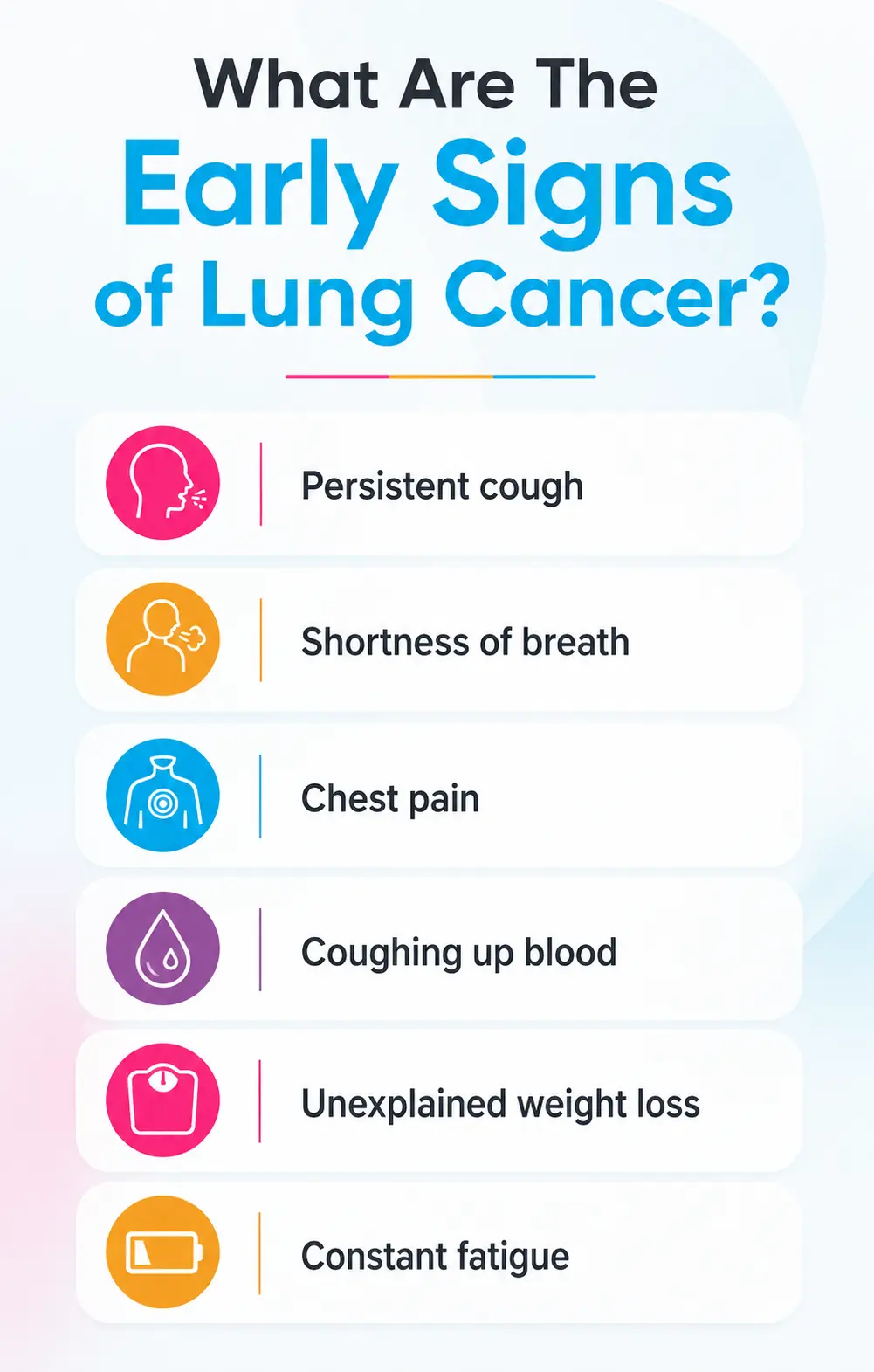
What Are The Early Signs of Lung Cancer?
Lung cancer often develops silently, and many people may not notice symptoms in its early stages. When signs do appear, they are often mistaken for common respiratory conditions. Recognising these symptoms early and seeking medical attention can lead to timely diagnosis and more effective treatment. Common early signs of lung cancer include:
- Persistent cough: A cough that lasts for more than three weeks or continues to worsen.
- Shortness of breath: Difficulty breathing during everyday activities or while resting.
- Chest pain: Ongoing pain or discomfort that may become worse while coughing or taking deep breaths.
- Coughing up blood: Even small amounts of blood in mucus should be evaluated by a doctor.
- Unexplained weight loss: Losing weight without changes to diet or physical activity.
- Constant fatigue: Feeling unusually tired despite getting enough rest.
What Causes Lung Cancer?
Lung cancer develops when healthy cells in the lungs undergo genetic changes that cause them to grow and multiply uncontrollably. While smoking is the leading cause, it is not the only one. Many people who have never smoked can also develop lung cancer due to environmental exposures, inherited genetic mutations, or occupational hazards. Understanding these risk factors can help individuals take preventive measures and seek timely medical evaluation.
Common causes and risk factors for lung cancer include:
Smoking
- Surgery is often the primary treatment for breast cancer, especially in early-stage cases.
- The goal is to remove the tumour while preserving as much healthy breast tissue as possible.
- Depending on the extent of the disease, breast-conserving surgery or mastectomy may be recommended.
Second-Hand Smoke
- Breathing in tobacco smoke from others can damage lung tissue even if you have never smoked.
- Regular exposure at home, work, or in public places increases the likelihood of developing lung cancer over time.
Air Pollution
- Long-term exposure to polluted air, including fine particulate matter and vehicle emissions, can irritate and damage the lungs.
- People living in highly polluted environments may have a higher risk of developing lung cancer, especially with prolonged exposure.
Radon Gas Exposure
- Radon is a naturally occurring radioactive gas that can accumulate inside homes, offices, and other enclosed spaces without being noticed.
- Prolonged exposure to high radon levels is one of the leading causes of lung cancer among non-smokers.
Occupational Exposure
- People who work with substances such as asbestos, silica, diesel exhaust, arsenic, or chromium may inhale harmful particles that damage lung cells.
- Following workplace safety measures and using protective equipment can help reduce this risk.
Family History and Genetics
- Some people inherit genetic mutations that make them more susceptible to lung cancer, even without significant environmental exposure.
- Having a close family member with lung cancer may slightly increase your overall risk, making regular health check-ups and awareness important.
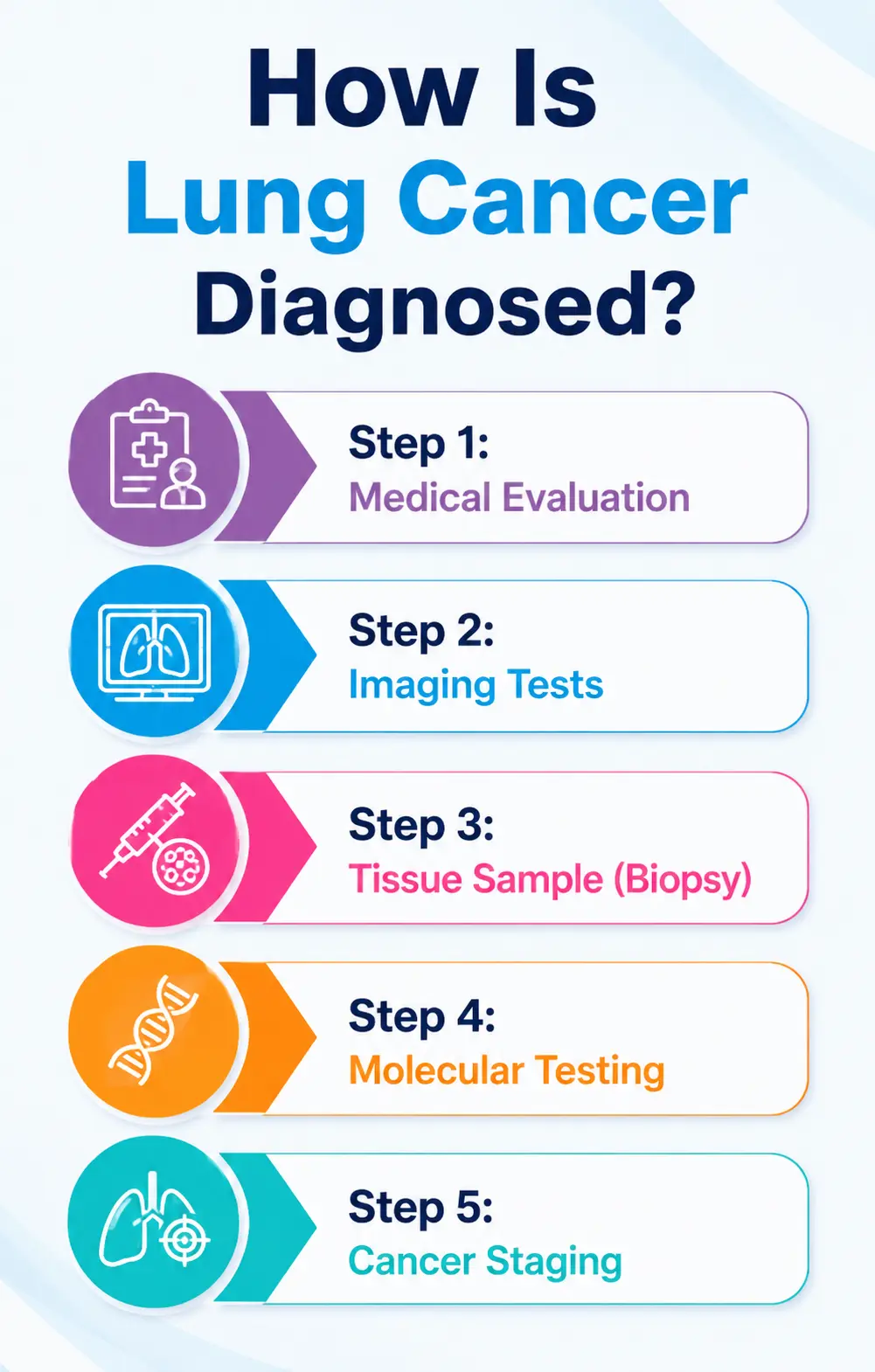
How Is Lung Cancer Diagnosed?
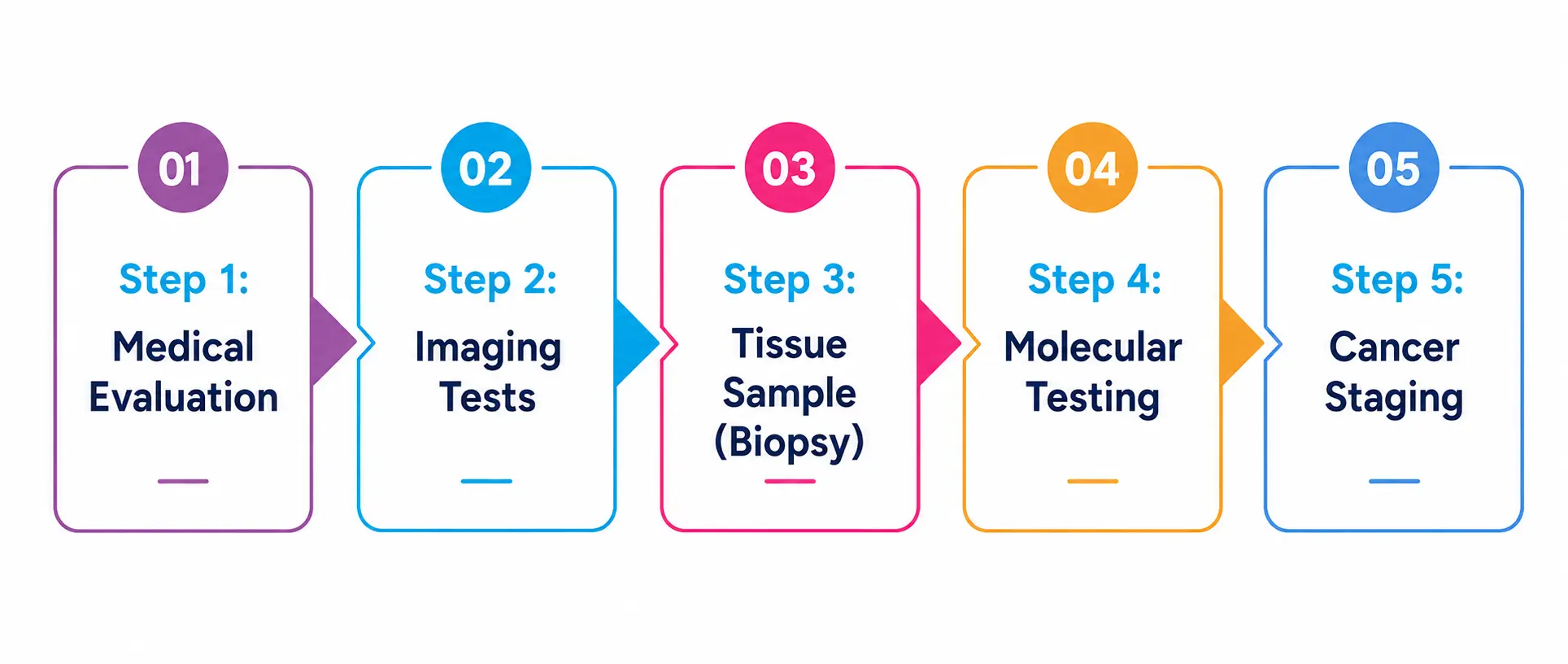
Diagnosing lung cancer is a step-by-step process that helps doctors confirm the presence of cancer, identify its type, and determine whether it has spread. A thorough diagnosis ensures that every patient receives the most appropriate and personalised treatment plan based on their condition.
Step 1: Medical Evaluation
Your doctor begins by understanding your overall health and assessing your risk factors.
- Review of symptoms: Persistent cough, chest pain, breathlessness, coughing up blood, or unexplained weight loss are discussed in detail.
- Medical and smoking history: Your doctor will ask about your smoking habits, occupational exposure, family history of cancer, and any previous lung conditions.
- Physical examination: A general examination helps identify signs that may indicate lung disease or other underlying health concerns.
Step 2: Imaging Tests
Imaging tests help detect abnormalities in the lungs and determine their size and location.
- Chest X-ray: Often the first imaging test used to identify suspicious masses or lung abnormalities.
- CT Scan: Produces detailed images of the lungs, helping detect small nodules and assess the extent of the tumour.
- PET-CT Scan: Determines whether the cancer has spread to nearby lymph nodes or other organs, which is essential for staging.
Step 3: Tissue Sample (Biopsy)
A biopsy confirms whether the abnormal growth is cancerous.
- Bronchoscopy: A thin tube with a camera is inserted into the airways to examine the lungs and collect tissue samples if needed.
- Needle biopsy: A fine needle may be used to remove tissue from the lung under CT or ultrasound guidance.
- Laboratory analysis: The collected tissue is examined under a microscope to confirm the presence and type of lung cancer.
Step 4: Molecular Testing
If cancer is confirmed, additional tests help personalise your treatment.
- Biomarker testing: The tumour is analysed for genetic mutations such as EGFR, ALK, ROS1, or other biomarkers.
- Treatment planning: The results help determine whether targeted therapy, immunotherapy, chemotherapy, or a combination of treatments is the best option.
Step 5: Cancer Staging
Once the diagnosis is confirmed, doctors determine how far the cancer has spread.
- Stage assessment: The cancer is classified from Stage I to Stage IV based on its size and spread.
- Lymph node evaluation: Doctors assess whether nearby lymph nodes are affected.
- Personalised care plan: The stage of lung cancer helps the oncology team recommend the most effective treatment approach and expected outcomes.
What Are The Options For Lung Cancer Treatment?
The treatment for lung cancer depends on several factors, including the type of lung cancer, its stage, the size and location of the tumour, whether it has spread, and the patient’s overall health. At Healius Complete Healthcare Clinics, a multidisciplinary team develops a personalised treatment plan to achieve the best possible outcomes while preserving the patient’s quality of life.
| Treatment Option | When Is It Recommended? |
|---|---|
| Surgery | Recommended for early-stage lung cancer when the tumour is confined to the lung and has not spread extensively. |
| Chemotherapy | Used before surgery (neoadjuvant), after surgery (adjuvant), or for advanced-stage lung cancer. |
| Radiation Therapy | Recommended when surgery is not possible, after surgery, or alongside chemotherapy. |
| Targeted Therapy | Suitable for patients whose cancer has specific genetic mutations, such as EGFR, ALK, ROS1, or BRAF. |
| Immunotherapy | Recommended for selected patients with advanced or metastatic lung cancer and some early-stage cases. |
| Combination Therapy | Recommended when two or more treatments offer the best chance of controlling the cancer. |
Why Choose Healius For Lung Cancer Treatment in Bangalore?
At Healius Complete Healthcare Clinics, we believe that every lung cancer patient deserves timely diagnosis, personalised treatment, and compassionate care. Our multidisciplinary team combines clinical expertise with advanced technology to provide evidence-based treatment plans that focus not only on treating cancer but also on improving your quality of life throughout your journey.
Multidisciplinary Team of Cancer Specialists
Our team led by lung cancer specialists work together to create a personalised treatment plan tailored to your diagnosis and overall health.
Personalised Treatment Plans
No two lung cancer cases are the same. We develop customised treatment strategies based on the type of lung cancer, its stage, molecular profile, and your individual health needs.
Advanced Diagnostic & Molecular Testing
We use advanced imaging, biopsy techniques, PET-CT evaluation, and molecular profiling to accurately diagnose lung cancer and identify targeted treatment options whenever appropriate.
Comprehensive Lung Cancer Treatments
From chemotherapy and immunotherapy to targeted therapy, precision medicine, and supportive cancer care, we provide a full spectrum of evidence-based treatment options under one roof.
Compassionate, Patient-Centred Care
Our team supports patients and their families at every stage of treatment by offering clear communication, emotional support, symptom management, and coordinated care throughout the cancer journey.
Focus on Early Detection & Better Outcomes
Early diagnosis plays a crucial role in successful treatment. We emphasise timely evaluation, accurate staging, and prompt treatment initiation to help improve survival rates and long-term outcomes.
State-of-the-Art Cancer Care Infrastructure
Our clinics are equipped with modern oncology facilities and advanced treatment protocols that enable us to deliver safe, efficient, and high-quality cancer care in a comfortable environment.
Convenient Cancer Care in Bangalore
Located in Bangalore, Healius offers easy access to expert lung cancer care, reducing the need for patients to travel long distances while ensuring continuity of treatment and follow-up.
FAQ
Frequently Asked Questions
Can lung cancer be cured?
Lung cancer can often be treated successfully, especially when it is diagnosed at an early stage. The outcome depends on factors such as the type of lung cancer, its stage, and the patient’s overall health.
When should I see a lung cancer specialist?
You should consult a lung cancer specialist if you experience a persistent cough, coughing up blood, unexplained weight loss, chest pain, or recurring lung infections. Early evaluation can help detect the condition before it progresses.
What is the cost of lung cancer treatment in Bangalore?
The cost of lung cancer treatment in Bangalore depends on the stage of the cancer, diagnostic tests, treatment type, medications, hospital stay, and follow-up care. Your oncology team will provide a personalised treatment estimate after evaluation.
How do I choose the best hospital for lung cancer treatment in Bangalore?
Choose a hospital that offers comprehensive cancer care, experienced medical oncologists, advanced diagnostic facilities, personalised treatment plans, and access to treatments such as surgery, chemotherapy, immunotherapy, targeted therapy, and supportive care.
Can non-smokers develop lung cancer?
Yes, although smoking is the leading risk factor, non-smokers can also develop lung cancer due to air pollution, second-hand smoke, radon exposure, occupational hazards, and certain genetic mutations.
Are there any foods to avoid during lung cancer treatment?
Some patients may need to avoid raw or undercooked foods, processed meats, excessive sugary foods, and alcohol, especially if their immune system is weakened during treatment. Your doctor or dietitian can provide dietary recommendations based on your treatment plan.
