
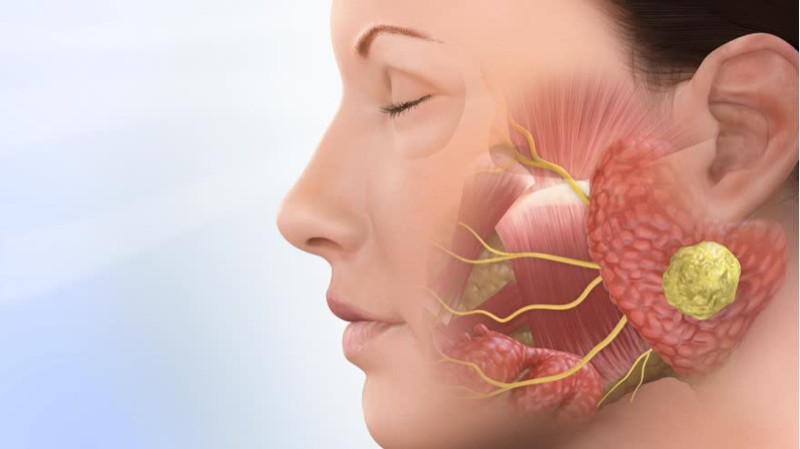
What are salivary glands?
Salivary glands produce saliva, which is essential for chewing, swallowing, and digestion. We have major glands (the parotid near the ear and submandibular under the jaw) and hundreds of minor glands throughout the mouth and throat.
A salivary gland carcinoma is a rare cancer originating in these tissues. While most salivary lumps are benign (non-cancerous), a small percentage are malignant. Because of its complexity, finding the best doctor for salivary gland cancer in Bangalore is crucial for an accurate diagnosis and effective treatment plan.
What Makes Salivary Gland Carcinoma Unique?
Compared to other cancers, salivary malignancies have very specific characteristics:
- Highly Rare: They represent a tiny fraction of all cancers, meaning specialized expertise is required for management.
- Diverse Subtypes: There are dozens of histological types, each requiring a different clinical approach.
- Perineural Invasion: Certain types grow along nerves, potentially causing facial numbness or paralysis.
- Long-Term Follow-up: Some types, like adenoid cystic carcinoma, can recur many years later, necessitating lifelong monitoring at a specialized center like Healius Clinic.
GLOBOCAN & India Data: How Common Is It?
In India, salivary gland tumors are uncommon but significant. Studies show they account for roughly 0.77% of male cancers and 0.57% of female cancers. Notably, while 70-80% of tumors in the large parotid gland are benign, tumors found in the smaller (minor) glands have a much higher chance of being malignant.
Expertise in distinguishing these types is why patients seek out the best doctor for salivary gland cancer in Bangalore at dedicated oncology centers.
🧬 Genetic Changes in Salivary Gland Cancers (Made Simple)
Modern oncology uses genetic “barcodes” to identify these cancers and guide therapy. Testing for these is becoming more common in India’s leading cancer centers:
- Mucoepidermoid Carcinoma: Often linked to a MAML2 fusion.
- Adenoid Cystic Carcinoma: Linked to MYB fusions, explaining its tendency to spread along nerves.
- Secretory Carcinoma: Features the ETV6-NTRK3 fusion, which can be treated with specialized NTRK inhibitors.
- Salivary Duct Carcinoma: May show HER2 amplification, allowing doctors to use targeted therapies similar to those used in breast cancer.
💡 What This Means for Patients
If you or a loved one is dealing with a salivary gland issue, specialized care is non-negotiable:
- Surgery & Precision: Surgery remains the primary treatment, often followed by targeted radiotherapy.
- Genetic Testing: Identifying the molecular signature of the tumor can open doors to new, targeted drugs.
- Comprehensive Care: Because these cases are rare, they are best managed by a multidisciplinary team.
Expert Care at Healius Cancer and Haematology Clinics
At Healius, we understand that a rare diagnosis requires extraordinary care. If you are searching for the best doctor for salivary gland cancer in Bangalore, our team provides the specialized surgical expertise and advanced genetic profiling needed for these complex cases.
A Final Message: Salivary gland carcinoma is a diverse challenge, but with early specialist care and the right genetic insights, long-term recovery is possible.
Contact Us: +91 9900613143 OR [Click Here]