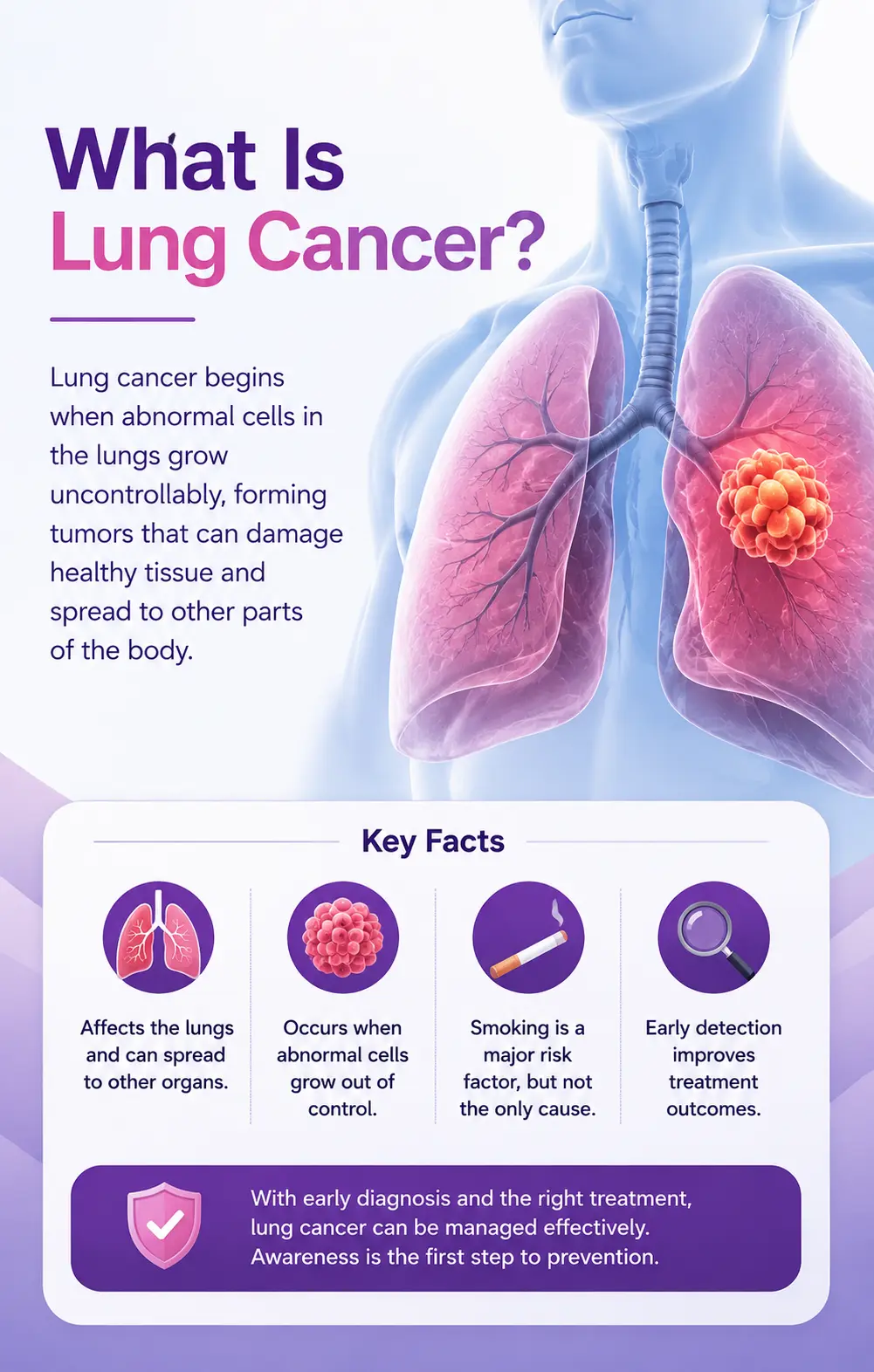
What Is Lung Cancer? Lung cancer is a condition in which abnormal cells in the lungs grow uncontrollably, forming a tumour that can interfere with normal breathing and lung function. If not diagnosed and treated early, these cancer cells may spread to nearby lymph nodes and other parts of the body. While smoking is the leading cause, lung cancer can also develop in non-smokers due to environmental and genetic factors. Key facts about lung cancer include: Starts in the lungs: Lung cancer usually begins in the cells lining the airways or lung tissue. Two main types: Non-small cell lung cancer (NSCLC) is the most common, while small cell lung cancer (SCLC) grows more aggressively. Can affect anyone: Although smokers are at higher risk, non-smokers can also develop lung cancer. May not show early symptoms: Many people experience no noticeable signs during the early stages. Treatable with timely care: Early diagnosis and personalised treatment can significantly improve outcomes and quality of life. What Are The Early Signs of Lung Cancer? Lung cancer often develops silently, and many people may not notice symptoms in its early stages. When signs do appear, they are often mistaken for common respiratory conditions. Recognising these symptoms early and seeking medical attention can lead to timely diagnosis and more effective treatment. Common early signs of lung cancer include: Persistent cough: A cough that lasts for more than three weeks or continues to worsen. Shortness of breath: Difficulty breathing during everyday activities or while resting. Chest pain: Ongoing pain or discomfort that may become worse while coughing or taking deep breaths. Coughing up blood: Even small amounts of blood in mucus should be evaluated by a doctor. Unexplained weight loss: Losing weight without changes to diet or physical activity. Constant fatigue: Feeling unusually tired despite getting enough rest. What Causes Lung Cancer? Lung cancer develops when healthy cells in the lungs undergo genetic changes that cause them to grow and multiply uncontrollably. While smoking is the leading cause, it is not the only one. Many people who have never smoked can also develop lung cancer due to environmental exposures, inherited genetic mutations, or occupational hazards. Understanding these risk factors can help individuals take preventive measures and seek timely medical evaluation. Common causes and risk factors for lung cancer include: Smoking Surgery is often the primary treatment for breast cancer, especially in early-stage cases. The goal is to remove the tumour while preserving as much healthy breast tissue as possible. Depending on the extent of the disease, breast-conserving surgery or mastectomy may be recommended. Second-Hand Smoke Breathing in tobacco smoke from others can damage lung tissue even if you have never smoked. Regular exposure at home, work, or in public places increases the likelihood of developing lung cancer over time. Air Pollution Long-term exposure to polluted air, including fine particulate matter and vehicle emissions, can irritate and damage the lungs. People living in highly polluted environments may have a higher risk of developing lung cancer, especially with prolonged exposure. Radon Gas Exposure Radon is a naturally occurring radioactive gas that can accumulate inside homes, offices, and other enclosed spaces without being noticed. Prolonged exposure to high radon levels is one of the leading causes of lung cancer among non-smokers. Occupational Exposure People who work with substances such as asbestos, silica, diesel exhaust, arsenic, or chromium may inhale harmful particles that damage lung cells. Following workplace safety measures and using protective equipment can help reduce this risk. Family History and Genetics Some people inherit genetic mutations that make them more susceptible to lung cancer, even without significant environmental exposure. Having a close family member with lung cancer may slightly increase your overall risk, making regular health check-ups and awareness important. Surgery is often the primary treatment for breast cancer, especially in early-stage cases. The goal is to remove the tumour while preserving as much healthy breast tissue as possible. Depending on the extent of the disease, breast-conserving surgery or mastectomy may be recommended. Breathing in tobacco smoke from others can damage lung tissue even if you have never smoked. Regular exposure at home, work, or in public places increases the likelihood of developing lung cancer over time. Long-term exposure to polluted air, including fine particulate matter and vehicle emissions, can irritate and damage the lungs. People living in highly polluted environments may have a higher risk of developing lung cancer, especially with prolonged exposure. Radon is a naturally occurring radioactive gas that can accumulate inside homes, offices, and other enclosed spaces without being noticed. Prolonged exposure to high radon levels is one of the leading causes of lung cancer among non-smokers. People who work with substances such as asbestos, silica, diesel exhaust, arsenic, or chromium may inhale harmful particles that damage lung cells. Following workplace safety measures and using protective equipment can help reduce this risk. Some people inherit genetic mutations that make them more susceptible to lung cancer, even without significant environmental exposure. Having a close family member with lung cancer may slightly increase your overall risk, making regular health check-ups and awareness important. How Is Lung Cancer Diagnosed? Diagnosing lung cancer is a step-by-step process that helps doctors confirm the presence of cancer, identify its type, and determine whether it has spread. A thorough diagnosis ensures that every patient receives the most appropriate and personalised treatment plan based on their condition. Step 1: Medical Evaluation Your doctor begins by understanding your overall health and assessing your risk factors. Review of symptoms: Persistent cough, chest pain, breathlessness, coughing up blood, or unexplained weight loss are discussed in detail. Medical and smoking history: Your doctor will ask about your smoking habits, occupational exposure, family history of cancer, and any previous lung conditions. Physical examination: A general examination helps identify signs that may indicate lung disease or other underlying health concerns. Step 2: Imaging Tests Imaging tests help detect abnormalities in the lungs and determine their size and location. Chest X-ray: Often the first imaging test used to identify … Continue reading Lung Cancer Treatment
